


Author :- Samiksha Shetty
Why Ankles Matter ?
The Hidden Problem
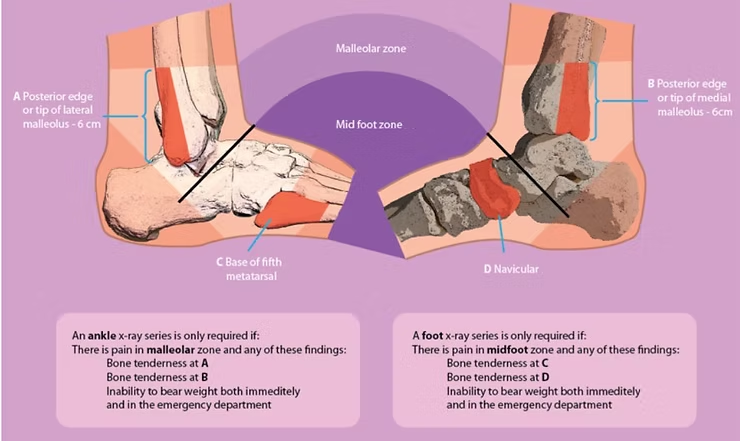
When to Get Assessed
If you experience any of these, it’s time to get checked:
· Sharp pain on the inside or outside of the ankle.
· Swelling and bruising within hours.
· Instability or “giving way” during play.
· Stiffness and reduced mobility.
· Frequent twists, slips, or a lingering ache after activity.
If your ankle keeps slipping, swelling, or aching, it’s your body’s way of saying:
get assessed by a PHYSIOTHERAPIST before it sidelines you for good.
How to Build a Stronger Ankle A resilient ankle isn’t just about calf raises. It’s about restoring the full system—strength, control, and power—that sport demands.
1. Strength

2. Neuromuscular control and Dynamic balance

3. Mobility
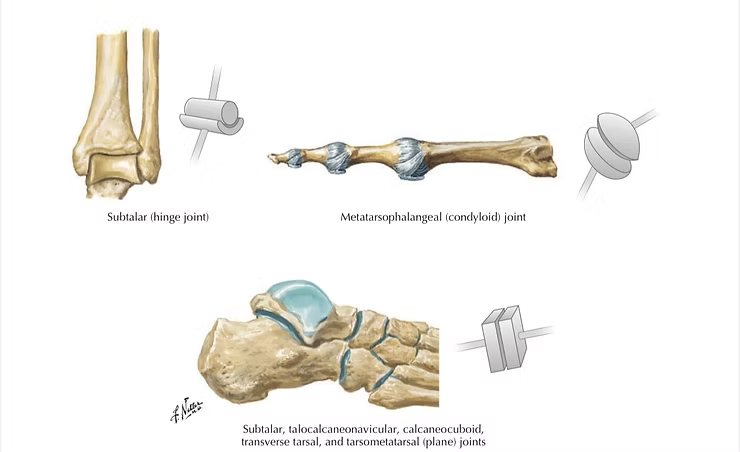
Adequate dorsiflexion and subtalar motion to avoid compensations.
4. Force Absorption and Reactive Power
Hops, bounds, lateral jumps, and landing mechanics to handle game-speed forces.

5. Endurance
High-rep heel raises, loaded carries, and sustained balance holds to last the whole match.
6. Sport-Specific Drills
Cutting, deceleration, and jump-landing patterns practiced before full return.
7. Footwear & Short-Term Support
Shoes matched to surface; bracing or taping only as a bridge, not a crutch.
Takeaway
A resilient ankle is more than pain-free—it’s what separates survival from peak performance. Left weak, it becomes the silent saboteur of balance, speed, and confidence. Trained well, it turns into a performance weapon: stable under chaos, explosive under pressure, and built to carry athletes further, faster, and longer.