
Shopping cart

breadcumb-thumb

Author :- Dr. Sakshi Palkrit

Whether you’re training for your first 5K, preparing for a marathon, or gearing up for a HYROX race, pain along the inside of your shin is one of the most common injuries that can interrupt training. Most runners know it as shin splints. The advice is almost always the same: “Take a week off.” The pain settles, you return to running, and within a few sessions it’s back again. Shin splints are not simply an inflammatory condition that settles down with pain, but it’s your body’s way of signalling that your tissues have not adapted to the demands placed upon them. The question isn’t “How do we get rid of the pain?” The question is “Why did your body stop tolerating your training?”

What Are Shin Splints?

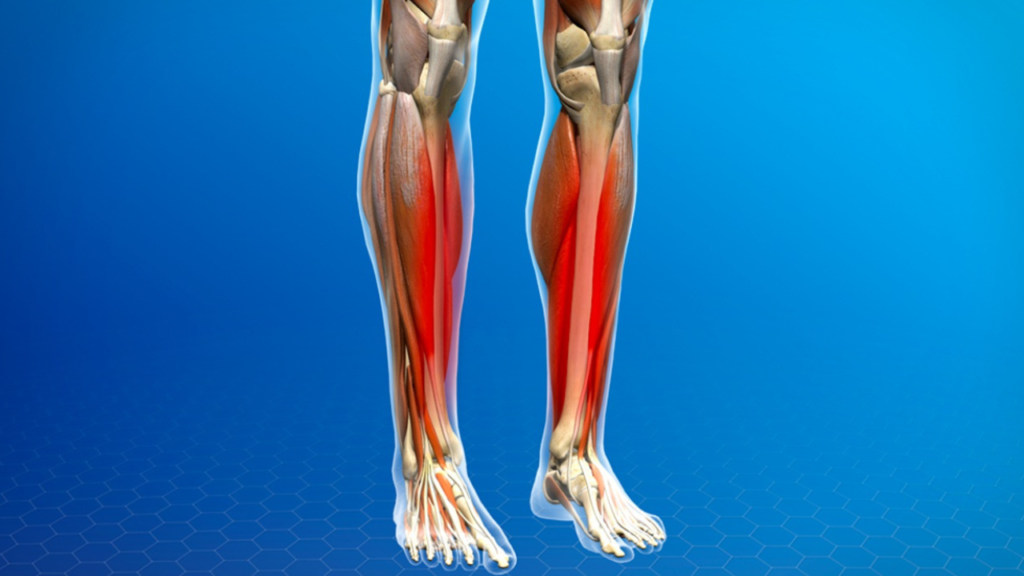
Shin splints, medically known as Medial Tibial Stress Syndrome (MTSS), are one of the most common overuse injuries in runners, field sport athletes, and increasingly, HYROX competitors. Current research no longer views MTSS as simply “inflammation of the shin.” Instead, it is considered part of the bone stress injury continuum. Every time your foot strikes the ground while running, forces of two to three times your body weight travel through your tibia (shin bone). Bone responds to appropriate mechanical loading by undergoing remodelling, a natural process where old bone is broken down and replaced with stronger bone. Problems arise when the mechanical load exceeds the bone’s ability to repair and adapt. The surrounding muscles and connective tissues also become overloaded, resulting in pain along the inner border of the tibia. This condition is what we recognise as Medial Tibial Stress Syndrome.
Why Do Shin Splints Develop?

The simple answer is: the mismatch between tissue capacity and training load. Your cardiovascular system often improves much faster than your musculoskeletal system. You may feel capable of running longer or faster because your breathing feels easier. Unfortunately, your bones haven’t necessarily caught up. This explains why many runners develop shin pain shortly after increasing mileage, introducing speed sessions, preparing for a race, or returning after a prolonged break.
Several factors can contribute to this overload, including:
  • Sudden increases in running volume, intensity, or frequency
  • Inadequate recovery, poor sleep, or insufficient nutrition
  • Reduced calf strength and lower limb endurance
  • Limited ankle mobility or inefficient running biomechanics
  • Returning to training too quickly after a break
  • Inappropriate footwear or sudden changes in training surface
  • Low energy availability, poor bone health, or menstrual dysfunction in female athletes
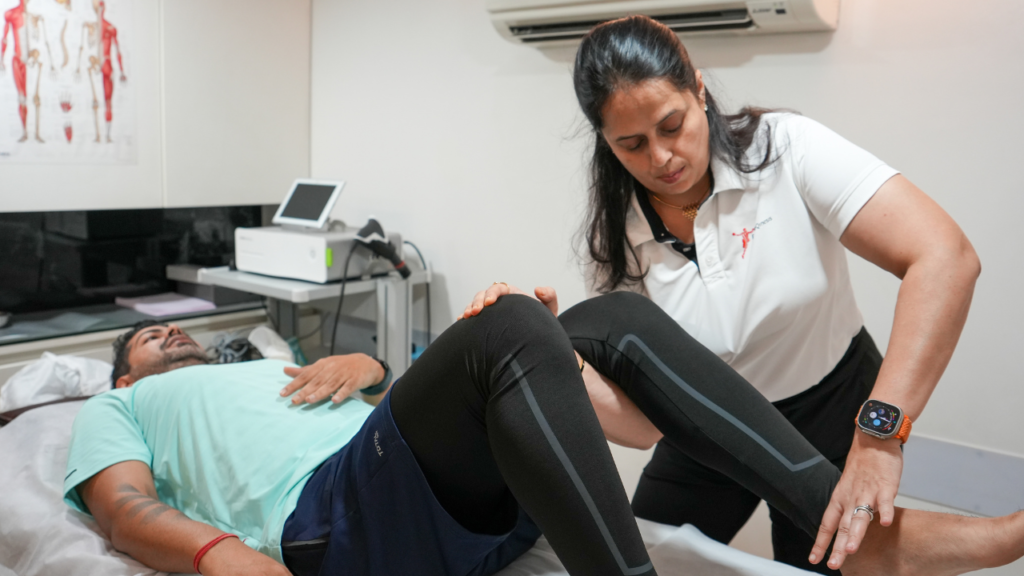
How Does a Sports Physiotherapist Treat Shin Splints?

The goal is not simply to reduce pain; the goal is to improve your body’s ability to tolerate running again. Successful rehabilitation focuses on restoring tissue capacity while gradually exposing the body to the demands of sport.

1) Load Modification

Complete rest is rarely the long-term solution. Instead, training is modified to reduce stress on the injured tissues while maintaining overall fitness wherever possible. This may involve adjusting mileage, running intensity, training frequency, or incorporating cross-training. The objective is to restore adaptation and not simply eliminate pain.

2) Progressive Strength Training

Strength training improves the lower limb’s ability to absorb and distribute repetitive running forces.
Rehabilitation commonly targets:
  • Soleus
  • Gastrocnemius
  • Tibialis posterior
  • Tibialis anterior
  • Foot intrinsic muscles
  • Gluteal muscles
  • Hamstrings
  • Core musculature
Rather than strengthening muscles in isolation, the goal is to improve the entire kinetic chain’s capacity to tolerate repetitive loading.

3) Running Gait Analysis

Running assessment extends a broader scope for assessment and not just the pain. Analyzing movement quality, cadence, stride length, impact loading, lower limb alignment, and force absorption strategies. Sometimes, small modifications in running mechanics can substantially reduce stress on the tibia without completely changing an athlete’s running style.

4) Mobility Assessment

Addressing restrictions in ankle mobility, foot mechanics or hip movement helps optimise force distribution throughout the lower limb.

5) Return-to-Run Progression

There is no universal timeline for returning to running.
Current evidence suggests that rehabilitation should be individualised based on pain response, tissue irritability and training tolerance rather than following rigid rules such as the “10% increase per week.”
The athlete progresses only when the tissues demonstrate the capacity to tolerate additional load.

Prevention Is About Building Capacity

Many runners believe injury prevention means stretching more.
Research tells us otherwise.
The athletes who remain healthy over long training seasons are not necessarily those who stretch the most.
They are the ones who consistently:
  • Progress training gradually
  • Strength train regularly
  • Prioritise recovery
  • Fuel appropriately
  • Monitor workload
  • Address pain early
  • Build resilient tissues capable of tolerating the demands of their sport
Performance and injury prevention are not separate goals; they are two outcomes of the same process.

When Should You See a Sports Physiotherapist?

Don’t ignore your symptoms if:
  • Pain returns every time you run
  • Pain worsens during or after training
  • Walking or hopping becomes painful
  • Pain is becoming more localised over one area of bone
  • Your performance is declining because of persistent discomfort
Early assessment can often prevent a minor overload injury from progressing into a stress fracture.

Comment (01)

  • Unlocker

    August 10, 2026 8:10 am

    unlocker.ai - The Ultimate AI Tool for Bypassing Restrictions and Unlocking Content Seamlessly!

Leave a Comment

Your email address will not be published. Required fields are marked *