

Author : - Mr. Taher Kudrati
Which Cardio Is Right for You? Treadmill vs Cycle vs Rower vs Cross Trainer
Walk into any centre and you’ll find a row of cardio machines waiting to be used. Some
people head straight for the treadmill, others prefer the stationary bike, while a few swear by
the rowing machine or cross trainer. The question is, is one better than the others?
The simple answer is no.
Each form of cardio challenges the body differently and offers its own unique benefits. The
best choice depends on your goals, current fitness level, injury history, and even the sport
you play. Understanding these differences can help you make smarter decisions instead of
simply choosing the machine that’s available.
The Treadmill: Best for Walking, Running and Bone Health
The treadmill is one of the most commonly used cardio machines because it closely mimics
natural movement. Whether you’re walking, jogging, or sprinting, it improves cardiovascular
fitness while strengthening the muscles used in everyday locomotion.
Because it is a weight-bearing activity, treadmill training also helps maintain bone mineral
density, an important benefit as we age. Running on a treadmill recruits the glutes,
quadriceps, hamstrings, calves, and core while placing a significant demand on the
cardiovascular system.
For runners and field sport athletes, the treadmill offers excellent sport specificity. It allows
structured interval sessions, tempo runs, incline walking, and endurance training, making it a
valuable tool for improving aerobic capacity and running economy.
However, the impact forces generated during running are much higher than with other cardio
machines. While this helps strengthen bones and connective tissues, it may not be suitable
for individuals with joint pain, obesity, or those recovering from lower-limb injuries.
Best for: Runners, weight loss, improving cardiovascular fitness, bone health, and
sport-specific conditioning.

The Stationary Bike: Low Impact, High Cardiovascular Benefit
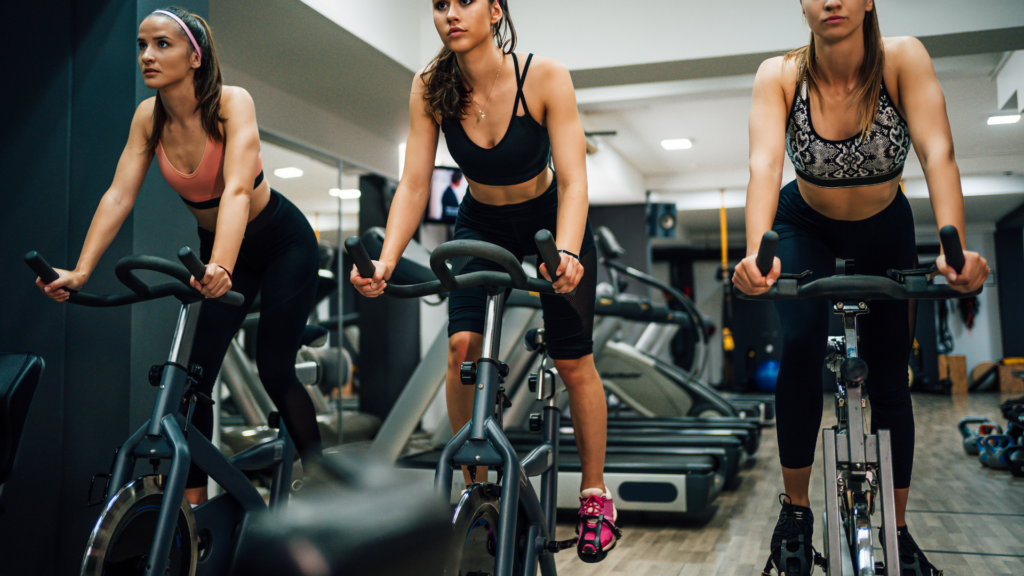
Cycling provides an excellent cardiovascular workout while placing minimal stress on the
joints. Because the body is supported by the saddle, there is very little impact through the
knees, hips, and ankles.
This makes the bike an ideal choice for beginners, older adults, individuals carrying excess
body weight, and those recovering from lower-limb injuries. It allows people to improve
fitness without the repetitive impact associated with running.
The stationary bike primarily targets the quadriceps, glutes, hamstrings, and calves. It is also
an excellent option for interval training, allowing athletes to reach high heart rates while
reducing mechanical stress on the body.
One limitation is that cycling is not weight-bearing. While cardiovascular fitness improves
significantly, it does not provide the same benefits for bone health as walking or running.
Best for: Beginners, rehabilitation, knee-friendly cardio, cycling athletes, and individuals
wanting high-intensity exercise with minimal joint stress.
The Rowing Machine: A Full-Body Cardio Workout
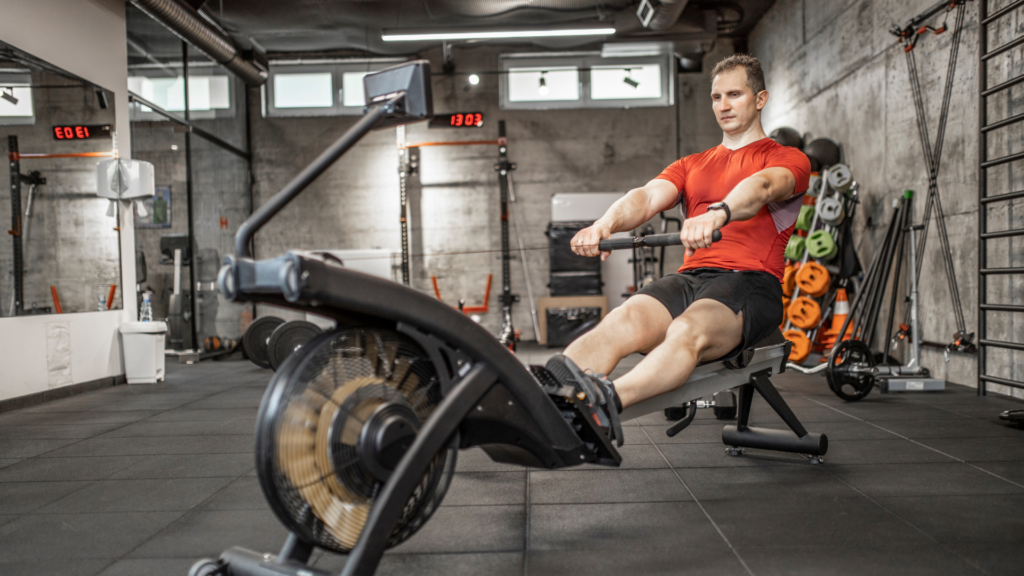
The rowing machine is often one of the most underutilised pieces of equipment in the gym.
Unlike the treadmill or bike, rowing combines cardiovascular training with whole-body
muscular involvement.
A proper rowing stroke recruits the legs, glutes, core, back, shoulders, and arms, making it
one of the most comprehensive forms of cardio available. Nearly every major muscle group
contributes to each stroke, increasing overall energy expenditure.
From a sports science perspective, rowing develops muscular endurance, aerobic fitness,
coordination, and power simultaneously. Because it is seated, it also produces very little
impact on the joints while still allowing athletes to perform high-intensity intervals.
Technique, however, is critical. Poor rowing mechanics can reduce efficiency and place
unnecessary stress on the lower back. Learning the correct sequence – legs, body, then
arms is essential before increasing intensity.
Best for: Full-body conditioning, calorie expenditure, athletes, and people looking for efficient
low-impact cardio.
The Cross Trainer (Elliptical): The Middle Ground
The cross trainer combines the movement patterns of walking, running, and stair climbing
while maintaining continuous foot contact with the pedals. This significantly reduces impact
forces without sacrificing cardiovascular demand.
Because the arms and legs work together, the cross trainer also increases total muscle
involvement compared to walking alone. The smooth movement makes it a popular option
for individuals recovering from injury or managing chronic joint discomfort.
While it doesn’t perfectly replicate running mechanics, it serves as an excellent alternative
during rehabilitation or on recovery days when athletes want to maintain fitness without
excessive loading.
Best for: Joint-friendly cardio, recovery days, beginners, and individuals returning after injury.
Which Burns the Most Calories?
Many people choose cardio based solely on calorie burn, but this can be misleading. The
number of calories burned depends far more on exercise intensity, duration, body weight,
and fitness level than on the machine itself.
At similar effort levels, rowing and treadmill running generally produce the highest calorie
expenditure because they involve more muscle mass and higher overall energy demand.
However, a challenging cycling or cross trainer workout can be just as effective when
performed at the appropriate intensity.
The most effective cardio is the one that you can perform consistently.
So... Which One Should You Choose?
There is no universally “best” form of cardio; only the one that best matches your goals.
If you’re training for a running event or want to improve running fitness, the treadmill is the
obvious choice. If you’re managing joint pain or recovering from injury, the stationary bike or
cross trainer may be more appropriate. If you’re looking for an efficient full-body workout that
combines strength and endurance, the rowing machine is difficult to beat.
At PQPL, we encourage people to think beyond calories or sweat. Cardio should be selected
based on your current fitness level, movement quality, injury history, and long-term goals.
The right choice today may not be the same choice six months from now and that’s perfectly
okay.
The Bottom Line
Cardiovascular training isn’t about finding the “perfect” machine. It’s about finding the right
tool for your body and your objective.
Whether you’re walking on a treadmill, cycling, rowing, or using a cross trainer, the goal
remains the same: to build a healthier heart, stronger lungs, better endurance, and a body
that’s capable of doing more.
Because the best cardio isn’t the machine everyone else is using.
It’s the one that helps you keep moving consistently, safely and with purpose.