

Author:- Ankita Hegade
What is a Deep Tissue Release?
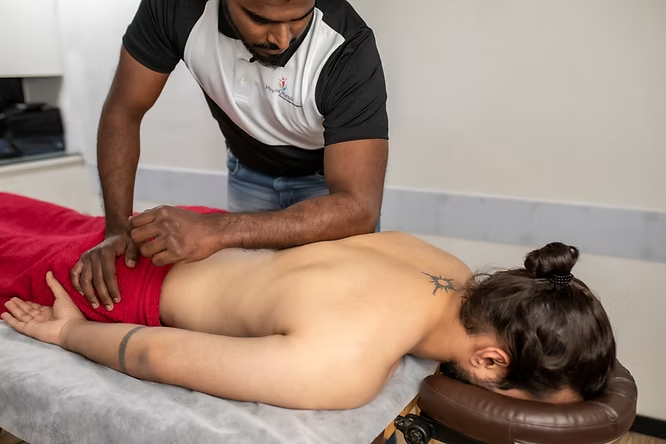
Deep Tissue Release is a form of manual therapy that targets tight or overworked muscles, tendons, and fascia. It involves a combination of pressure and stretching applied directly to the deep tissues to help release built-up tension and restore healthy movement.
Unlike a general massage, a deep tissue massage focuses on specific areas of tightness and works through a combination of:
· Targeted pressure on a muscle or area of tension
· Active or passive movement of the body to stretch and release the tissue
This technique allows for deep release without excessive force, making it ideal for both therapeutic and relaxing sessions.
Benefits of Deep Tissue Release for Recovery
This supports recovery in a variety of ways:
· Relieves muscle stiffness and tightness from daily strain or inactivity
· Improves circulation, helping your muscles heal faster
· Reduces tension headaches and neck/shoulder discomfort
· Improves flexibility and mobility
· Breaks down scar tissue from old injuries or surgeries
· Supports relaxation and reduces stress
It’s especially beneficial for people who:
· Sit at a desk all day
· Experience chronic tension (e.g., in the back, neck, or calves)
· Have limited mobility or stiffness
· Are in post-injury or post-surgery rehab
What to Expect During a Session
A typical deep tissue release session is very personalized. Your therapist will:
1. Identify areas of tightness or discomfort
2. Apply focused pressure to specific muscle areas
3. Guide your limb or joint through a slow, controlled stretch
4. Release and repeat as needed
You may feel some mild discomfort during the stretch—but it should never be painful. After the session, most people report feeling lighter, looser, and more mobile.
How Often Should You Use Deep tissue release ?
This depends on your lifestyle and goals. For general recovery and maintenance:
· 1 session every 2–4 weeks is usually effective
· During periods of high stress or increased physical activity, weekly sessions may help keep tension at bay
Deep tissue release at Home

While a trained therapist is ideal, you can mimic its principles with tools like:
· Foam rollers
· Massage balls
· Assisted stretching
These won’t replace hands-on therapy but can be great in-between sessions.