

Author :- Daniel Jayaprakash
Why Getting Stronger Matters More as You Age
Small stumbles, a “close call” on the stairs, a moment of instability when reaching for a cabinet are all indications of a quiet pattern that takes place in the lives of older adults. These moments, often brushed away as signs of aging are the warning signs of the first crack in the foundation that could have been made solid through regular strength training. If you’re over 60, building and keeping muscle isn’t vanity — it’s the single most controllable factor standing between you and losing your independence.
The Fear of Falling Spiral

One fall/close call → fear → activity restriction → less strength/balance → higher fall risk → repeat
The pattern that we most often observe starts smaller than people think. One fall – even a close call – triggers fear. The fear leads to movement restriction: avoiding the stairs, skipping walks, sitting more often. The increased inactivity results in reduced strength and reduced balance increasing the chances of the next fall. This downward spiral of avoidance exponentially increases the risk of the next fall, and with each cycle independence shrinks a little more.
Adaptations of Training After 60
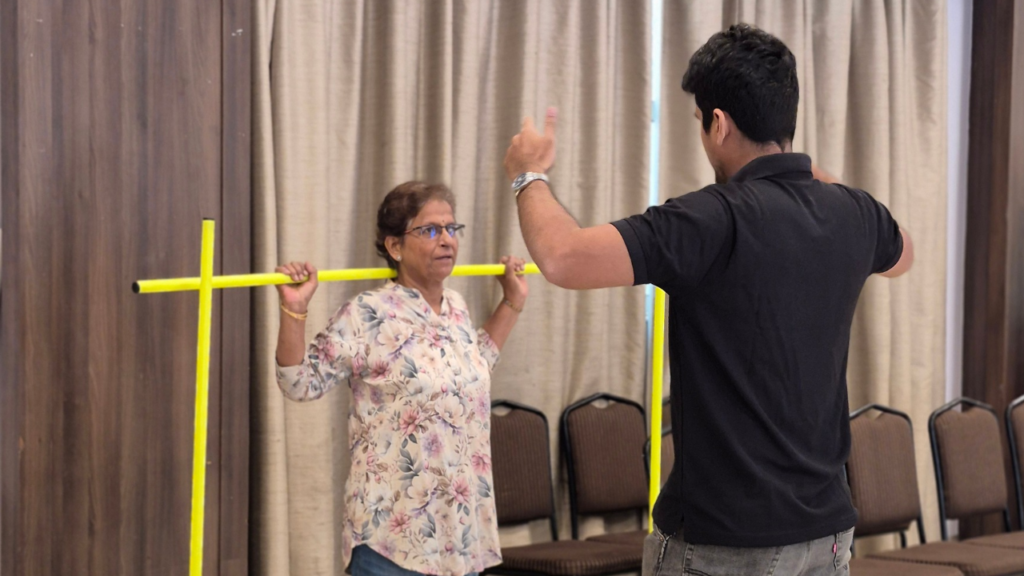
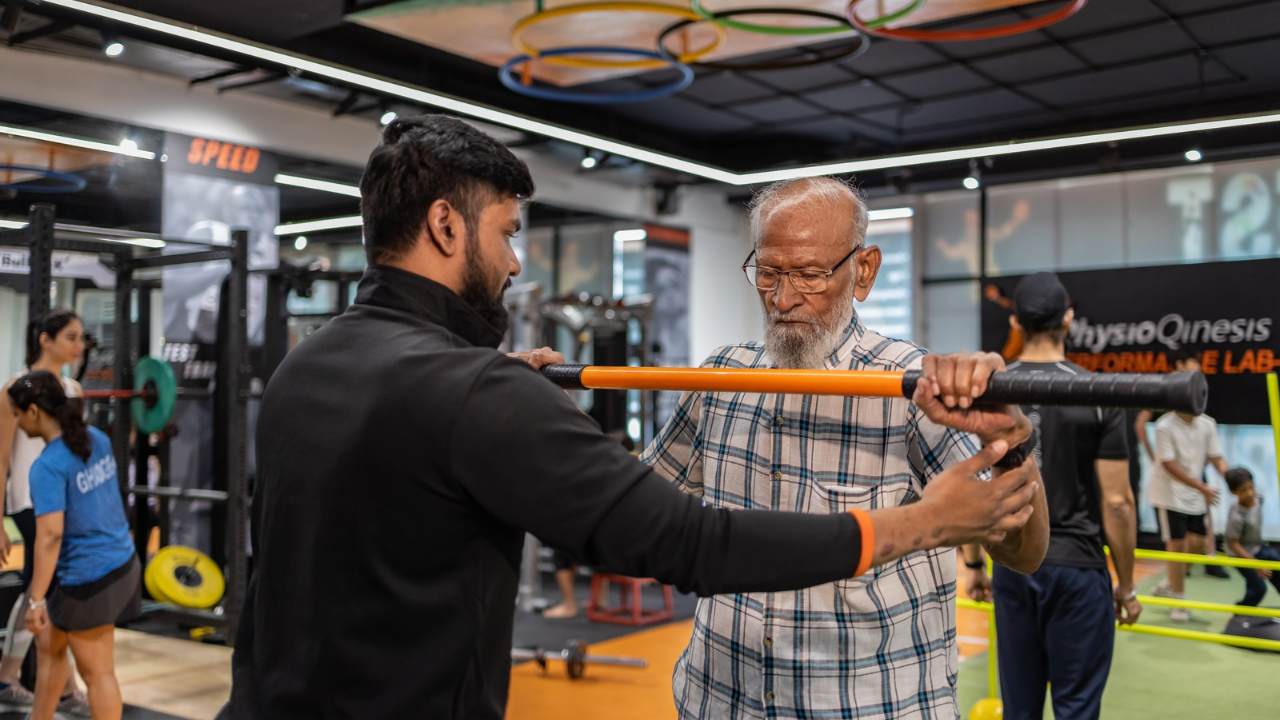
Advancing in age is not synonymous with losing the ability to adapt to strength training. In fact, many individuals who have begun their fitness journey much later in life still show great progress when adhering to a structured strength training program. Many seniors describe early indicators of adaptation as improved quality of movement, more confidence when using the stairs, reduced joint pain, reduced fatigue and a restored sense of independence.
But what’s truly going on behind the scenes? – A few things happen when someone in their 60s and beyond start lifting more consistently.
Neural adaption – This is the adaptation that comes first and comes fast! Focusing on form and technique during training sessions introduces the body to a whole new set of movement patterns. The nervous system gets better at recruitment of existing muscle fibers and firing them in sequence. This is why progress within the first few weeks of training is rapid – and explains why there is an in reaction time and stability. This directly links to an improved response time to stabilize before a stumble becomes a fall.
Muscle fibers grow back – aging muscles lose up to 3-8% of muscle every decade after the age of 40. The rate of muscle loss sharply increases after the age of 60. Research has consistently shown that regular strength training can help restore some of this muscle loss and directly correlates to gains in grip strength, increased extension strength, better eccentric control and measurable progress in fitness tests such as the Timed Up and Go test.
Fast twitch muscle fibers – usually the first to go – respond best to loading. These muscle fibres power the body for quick movements and better reaction time in moments like stopping a stumble. Regular strength training can selectively target these fibers to preserve them.
Tendons and bone strength – Regular loading promotes increased bone mass density and improved tendon stiffness. Both these adaptations play an important role in transferring strength to quality movement.
Training That Actually Works After 60
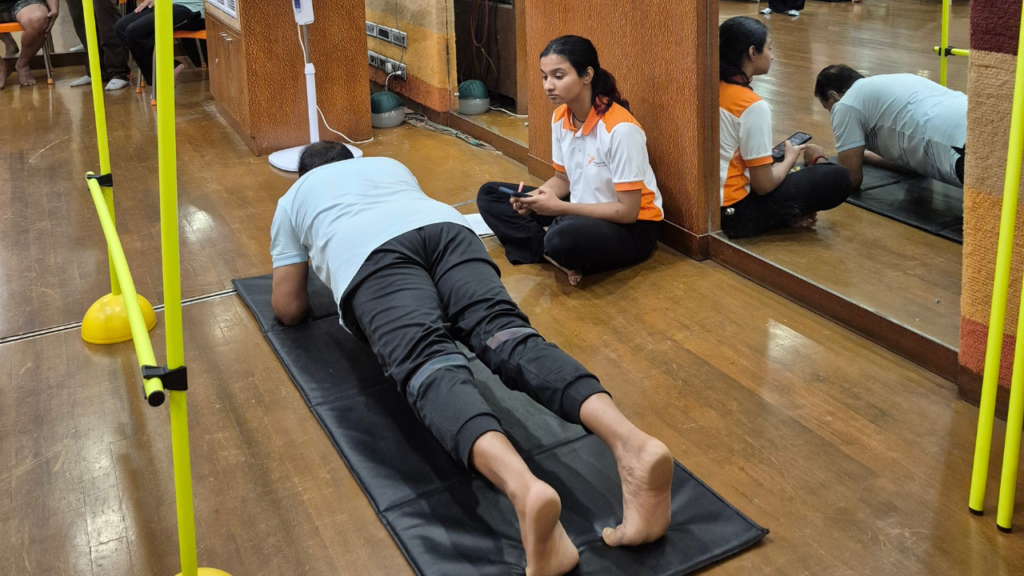
An effective training program for senior citizens plays off the four pillars of clinical exercise.
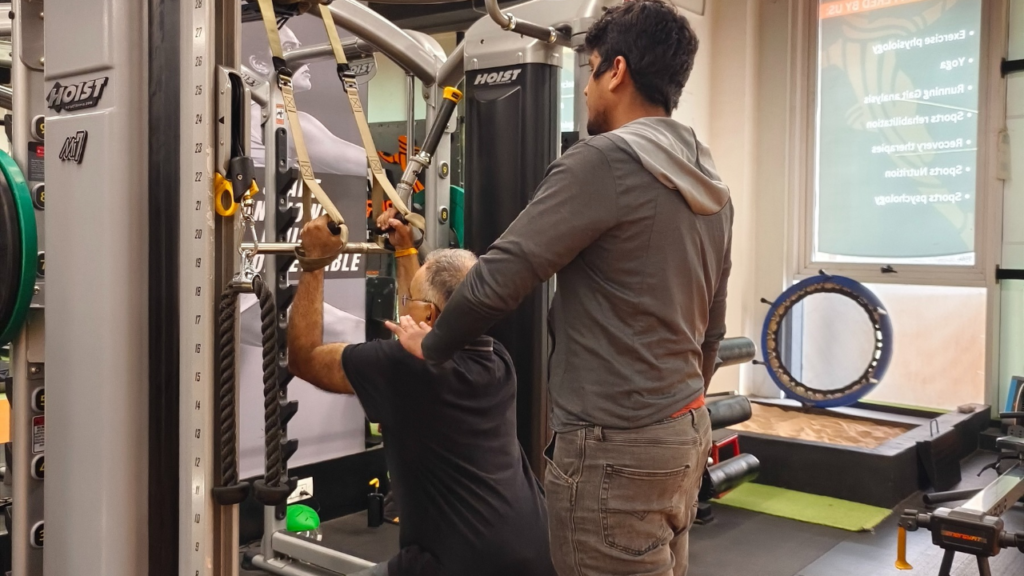
Strength training – 2-3 times a week – This one is nonnegotiable! Targeting specific muscle groups especially the legs and hips, and focusing on fundamental movements using load that challenges the muscles.
Balance training – most days of the week – Single leg stands and dynamic mobility drills and exercises that reduce that base of support progressively. Balance is trainable and adaptations are quick with exercise adherence.
Flexibility and mobility – several times a week –Helps to maintain and improve joint range of motion. Promoting better functional movement to support strength and balance training demands.
Aerobic capacity – As often as possible – Doing more than just a daily stroll by defining the intensity of the aerobic activity through training zones, target heart rates, distance, time or modes of training to gradually progress the training demands. A good endurance program helps to manage fatigue, improves response to exercise and promotes faster recovery.
Combining strength and balance training not only gives the best results – but also prepares older adults to train their bodies to withstand real unstable conditions and develop strength in multiple planes and axes.
The Bottom Line
Getting stronger after the age of 60 isn’t necessarily about the PRs and barbells. It’s about improving capability – to catch yourself, to use the stairs, to live outside the falling spiral- promoting longevity, increasing self confidence and restoring independence.
Strength training – going to the gym – has never only been a young person’s game. Training goals vary, seek out structure and prioritise function. Even the aging body has the ability to adapt, all it needs is the right stimulus.