



Author :- Dr. Ankita Hegde
Ankle sprains are among the most common musculoskeletal injuries, particularly in athletes involved in sports that require running, jumping, landing and frequent changes in direction.
For many people, the initial injury improves within a few days or weeks. However, some experience repeated ankle sprains, persistent instability or a feeling that the ankle is “giving way.”
So why does this happen?
The answer is often not simply that the ankle is “weak.” In many cases, the ankle has not completely regained the mobility, strength, balance, proprioception and neuromuscular control required to safely manage everyday and sporting activities.
Pain-free Does Not Always Mean Fully Recovered
One of the most common mistakes following an ankle sprain is returning to normal activity as soon as the pain and swelling have reduced. Although these are positive signs, they do not necessarily indicate complete recovery.
Following an ankle sprain, an individual may continue to have:
- Reduced ankle range of motion
• Decreased muscle strength
• Impaired balance
• Reduced proprioception
• Altered movement patterns
• Poor single-leg control
• Reduced confidence during running or landing
These deficits may not be noticeable during normal walking but can become significant during high-speed running, jumping, landing and rapid changes of direction.

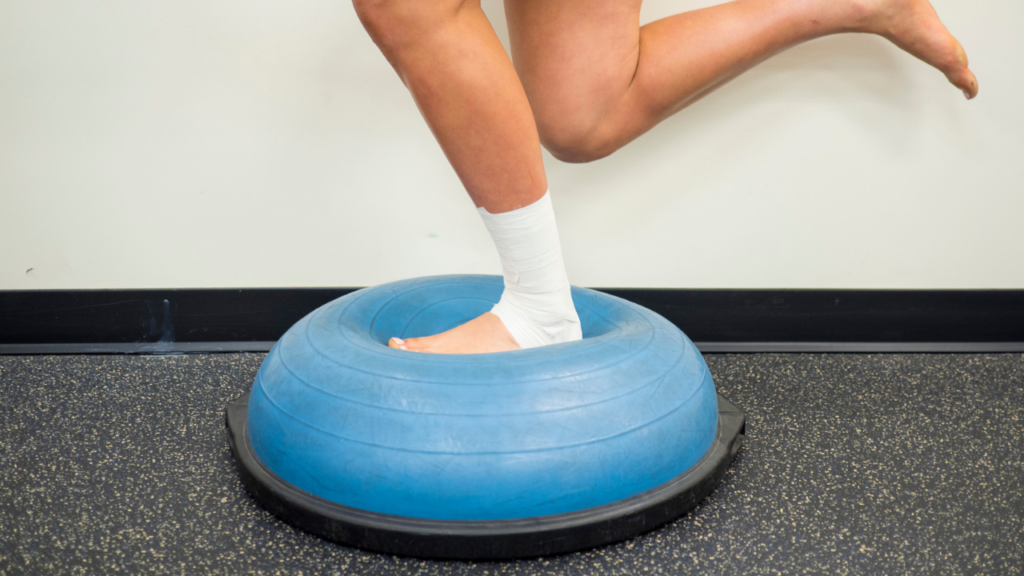
The Role of Proprioception and Balance
Proprioception is our body’s ability to sense the position and movement of a joint.
An ankle sprain can affect the sensory information coming from the injured structures. As a result, the body’s ability to respond quickly to unexpected movements may be reduced.
This is particularly important for athletes. For example, during a game, an athlete may land slightly outside the ideal position or step on another player’s foot. The body needs to react quickly to maintain stability and prevent excessive ankle movement.
This is why rehabilitation should include progressive balance, proprioception and neuromuscular control exercises, rather than focusing only on pain relief and basic strengthening.
Strength Is an Important Part of Recovery
After an ankle injury, weakness can develop in the muscles responsible for controlling the foot and ankle.
However, effective rehabilitation should not focus only on isolated ankle muscles.
The entire lower limb contributes to movement and stability. The strength and control of the foot, ankle, calf, knee and hip can influence how an athlete lands, runs and changes direction.
A rehabilitation programme should therefore progressively challenge strength and control through movements that are relevant to the individual’s activity or sport.
Limited Ankle Mobility Can Also Contribute
Ankle mobility, particularly dorsiflexion, plays an important role in movements such as squatting, running, jumping and landing.
If ankle mobility is restricted, the body may compensate by altering movement at other joints. These compensations can affect movement efficiency and load distribution across the lower limb.
A comprehensive assessment should therefore look beyond the painful area and evaluate how the entire lower limb is functioning.
Returning to Sport Before the Ankle Is Ready
Being able to walk without pain is very different from being ready to return to sport.
An athlete may be able to walk and jog comfortably but still struggle with:
- Sprinting
• Repeated jumping
• Landing
• Sudden deceleration
• Cutting and changing direction
• Sport-specific movements
This is why return to sport should not be based solely on time since injury or absence of pain. Instead, rehabilitation should progressively prepare the ankle for the specific demands of the athlete’s sport.

How Can Recurrent Ankle Sprains Be Prevented?
The goal of ankle rehabilitation should be more than simply reducing pain.
A comprehensive rehabilitation programme should progressively address:
Mobility → Strength → Balance → Neuromuscular control → Hopping and landing → Running → Change of direction → Sport-specific performance
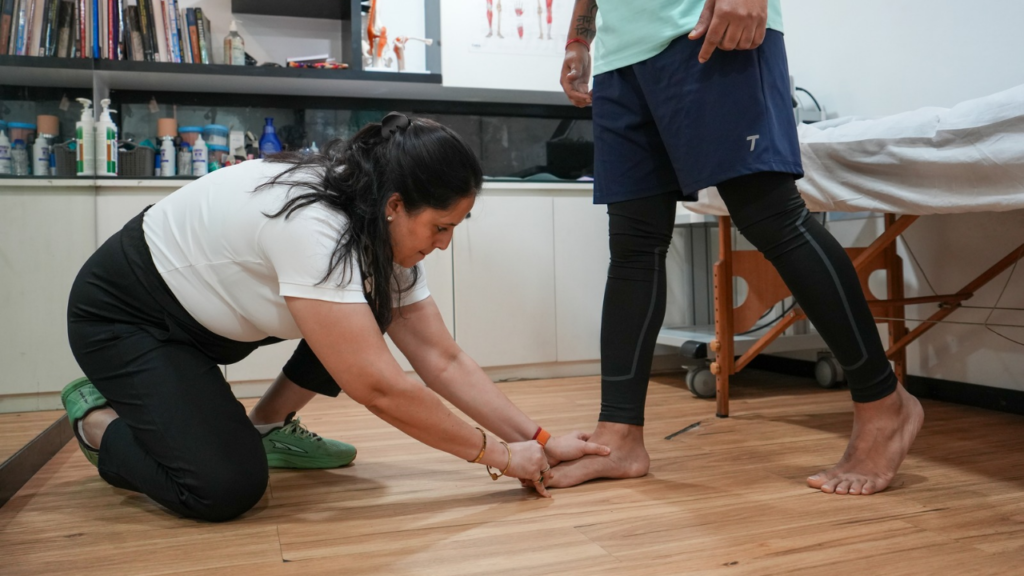
A physiotherapist may assess:
- Ankle range of motion
• Calf and ankle strength
• Single-leg balance and control
• Proprioception
• Jumping and landing mechanics
• Running mechanics
• Change-of-direction ability
• Functional performance
• Sport-specific demands
For athletes with recurrent ankle sprains, taping or an ankle brace may also be considered as part of an overall injury-prevention strategy, particularly during the return-to-sport phase.
However, external support should complement rehabilitation rather than replace it.
When Should You See a Physiotherapist?
A professional assessment is recommended if you experience:
- Repeated ankle sprains
• A sensation of the ankle “giving way”
• Persistent pain or swelling
• Ongoing stiffness
• Difficulty with running or jumping
• Lack of confidence during sport
• Recurrent symptoms after returning to activity
A physiotherapist can identify the factors contributing to recurrent injury and develop a progressive rehabilitation programme based on your individual goals and sporting requirements.
The Takeaway
An ankle sprain may appear to be a simple injury, but inadequate rehabilitation can leave behind deficits in strength, mobility, balance and movement control.
If these factors are not addressed, the risk of recurrent ankle sprains may increase.
The goal of rehabilitation should not simply be to make the ankle pain-free.
It should be to restore the ankle’s ability to move well, produce and tolerate force, respond to unexpected movements and perform confidently under the demands of your sport.
If your ankle keeps giving way, don’t simply wait for the next sprain. Get it assessed, identify the underlying factors, and rehabilitate it properly.
Because successful recovery is not just about returning to activity—it is about returning with confidence and capacity.