

Perimenopause: The Most Underrated Strength Window in a Woman’s Life
Author - Pruthvi Shetty
What is Perimenopause?


Women usually present with symptoms like:
- Irregular/missed periods, heavy/lighter bleeding.
- Hot flashes, night sweats, and palpitations.
- Generalized joint pain and stiffness, reduced muscle strength.
- Urinary urgency, stress incontinence, and vaginal dryness.
- Fatigue, reduced exercise tolerance, and low energy levels.
- Increased abdominal fat and difficulty losing weight.
- Anxiety, irritability, mood swings, brain fog, and reduced concentration.
How does it affect the body?
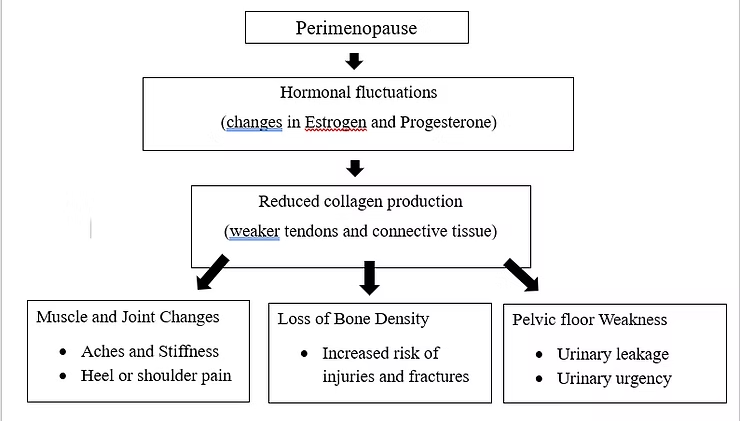
Perimenopause is a critical window. The changes happening now determine your muscle strength, bone health, and metabolic health in your 50s and 60s. Waiting until menopause to act means playing catch-up.
How does Physical activity and Strength training help?
Research shows that staying physically active, especially through strength training, can ease many of the physical and metabolic changes associated with perimenopause.
- Builds strength and preserves muscle mass:
a)Stimulates muscle growth.
b) Improves muscle tone.
c) Enhances joint support.
d) Improves daily activities (Stair climbing, lifting, getting up from the floor).Stronger muscles = better stability + better metabolism + better confidence.
2. Improves Bone Mineral Density:
a) Stimulate bone cells.
b) Slow bone loss.
c) Reduces risk of osteoporosis and fractures.
3.Improves Metabolic Health & Insulin Sensitivity:
a) Increases lean muscle mass.
b) Improves glucose uptake.
c) Enhances insulin sensitivity.
d)Boosts resting metabolic rate.
Stronger muscles → better blood sugar control → lower long-term metabolic risk.
4. Improves Pelvic Floor Function:
a) Maintains pelvic floor muscle strength and endurance.
b) Reduces urinary leakage and urgency.
c) Supports pelvic organ stability.
d) Improves confidence during lifting, running, and daily activities.
Where does a Physiotherapist make the difference?
Knowing that strength training helps is one thing.
Doing the right kind of training — at the right intensity, with the right progression — is another.
This is not the time to “slow down.” It is a time to train intelligently.
A physiotherapist bridges the gap between hormonal changes and safe performance by providing:
1. Detailed musculoskeletal and movement assessment
2.Tendon load management strategies
3. Individualized strength programming
4. Progressive overload with tissue tolerance in mind
5. Injury prevention and long-term joint protection
6. Pelvic Floor–Integrated Strength Training
One of the most overlooked aspects of perimenopausal care is pelvic floor health.
A physiotherapist ensures that strength training is not just about lifting weights, but about integrating:
1. Pelvic floor activation with breathing mechanics
2. Core–pelvic floor coordination during lifting
3. Intra-abdominal pressure regulation
4. Functional strength for real-life demands
Perimenopause is a turning point — not a decline.
It is the beginning of intentional strength. With the right physiotherapy guidance, what you build now determines how you move, feel, and function for decades to come.