Author :-Ashwini Rao
What is Manipulation Under Anaesthesia (MUA)?
Manipulation Under Anaesthesia (MUA) is a procedure in which the patient is put under general anaesthesia while the doctor forcibly manipulates the shoulder joint to break up adhesions and scar tissue that limit movement. The goal is to restore shoulder motion by physically stretching the joint and disrupting the internal restrictions.
Although MUA can provide rapid relief from stiffness, it comes with significant drawbacks that make it a less desirable long-term solution.
1. Invasive Procedure with Potential Risks
2. Temporary Relief
3. Lack of Personalization
Why is Physiotherapy the Preferred Treatment?
1. A Comprehensive, Holistic Treatment Approach
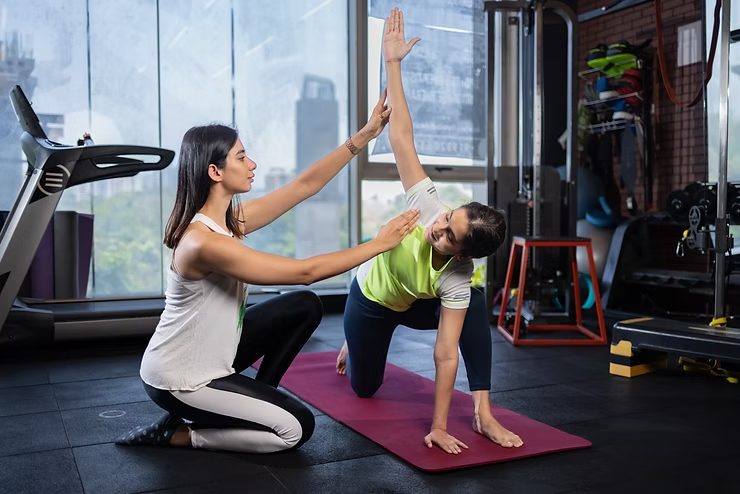
Physiotherapy goes beyond just alleviating pain. It focuses on treating the root causes of frozen shoulder, such as inflammation, muscle tightness, joint stiffness, and impaired mobility. A physiotherapist develops a customized treatment plan that may include a mix of manual therapy (like joint mobilization), strengthening exercises, stretches, and modalities such as ultrasound or electrotherapy to reduce pain and promote healing. This multi-faceted approach addresses the entire condition, leading to more sustainable and effective results (Feryawan & Nolan, 2022).
Furthermore, physiotherapy incorporates functional activities of daily living (ADL) rehabilitation into the treatment plan. This involves practicing specific movements and tasks that mimic real-life activities, such as reaching for objects, dressing, combing hair, and carrying items. By focusing on functional ADL rehabilitation, physiotherapy helps patients regain confidence and independence in performing daily tasks, improving their overall quality of life.
2. Gradual, Safe Progression
3. Long-Term Benefit
4. Personalized Care
5. Empowering Patients with Knowledge
Evidence: Why Physiotherapy Outperforms MUA in Treating Frozen Shoulder?
Recent research consistently supports the effectiveness of physiotherapy in treating frozen shoulder. A systematic review and meta-analysis published in the Journal of Orthopaedic and Sports Physical Therapy found that physiotherapy is equally effective as Manipulation Under Anaesthesia in improving shoulder range of motion and reducing pain. However, the study also emphasized that physiotherapy has a much lower risk of complications, making it a safer option for most patients (Journal of Orthopaedic and Sports Physical Therapy, 2023).
Additionally, a study published in the Journal of Shoulder and Elbow Surgery demonstrated that a well-structured physiotherapy program, combining manual therapy and targeted exercises, significantly improves shoulder function and alleviates pain in patients with frozen shoulder. The research also noted that physiotherapy is a more cost-effective treatment option compared to MUA, avoiding the risks and expenses associated with an invasive procedure (Journal of Shoulder and Elbow Surgery, 2023).
Conclusion: Choosing Physiotherapy for Lasting Relief
Although MUA may provide temporary relief for frozen shoulder, it is invasive, risky, and not a long-term solution. On the other hand, physiotherapy offers a safe, holistic, and personalized approach that addresses the root causes of the condition while promoting long-term healing and strength.
With its gradual, patient-centred progression and focus on education and prevention, physiotherapy provides a more effective and sustainable treatment for frozen shoulder. If you’re dealing with the pain and limitation of frozen shoulder, seeking the expertise of a qualified physiotherapist is your best step toward recovery. Physiotherapy not only helps alleviate your current symptoms but also supports long-term shoulder health, enabling you to live a pain-free, active life.
References:
– Itoi, E., & Minagawa, H. (2019). Manipulation Under Anesthesia for Frozen Shoulders. In Shoulder Stiffness (pp. 205-215). SpringerLink.
– Dr. Mohd. (2018). Treatment of Frozen Shoulder by Manipulation under Anesthesia with Intra-Articular Injection. International Journal of Science and Healthcare Research, 7(7), 328.
– Feryawan, P. M., & Nolan, J. (2022). Physical Therapy and Manipulation under Anesthesia for Patients with Frozen Shoulder. International Journal of Science and Healthcare Research, 7(1), 18.
– Journal of Orthopaedic and Sports Physical Therapy. (2023). Systematic Review and Meta-Analysis on Physiotherapy for Frozen Shoulder.
– Journal of Shoulder and Elbow Surgery. (2023). Comparative Study on Physiotherapy and MUA for Frozen Shoulder.