

Author :- Mr. Taher Kudrati
When we talk about athletic performance, speed usually gets all the attention. We want
athletes to sprint faster, accelerate harder, jump higher, and change direction more quickly.
But there is another side of speed that is often overlooked: the ability to slow down and stop
efficiently.
An athlete can be incredibly fast, but if they cannot control that speed, it becomes difficult to
change direction, react to an opponent, or safely absorb the forces created during
movement. This is where deceleration training becomes an important part of strength and
conditioning.
What Is Deceleration?
Deceleration is the ability to reduce or control the body’s speed by producing force against
the ground. Every time an athlete slows down from a sprint, stops before changing direction,
lands from a jump, or takes a few steps to regain balance, they are decelerating.
Unlike acceleration, where the goal is to increase velocity, deceleration requires the athlete
to absorb and control force. This places significant demands on the muscles, tendons, joints,
and nervous system, particularly during the eccentric phase of movement.
In simple terms, acceleration gets you there. Deceleration allows you to control what
happens next.
Why Is Deceleration Important for Athletes?
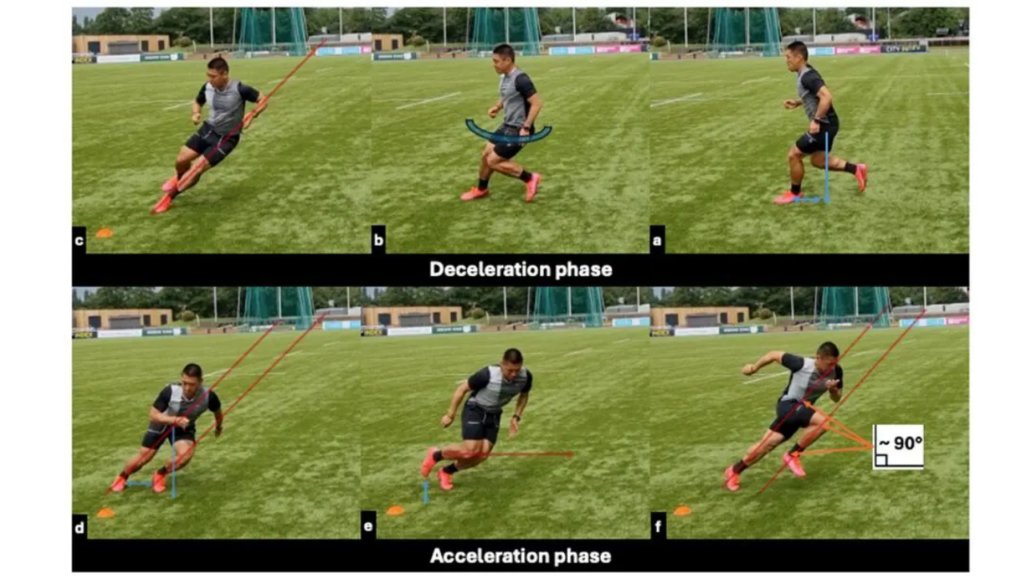
Sport rarely involves running in a straight line at a constant speed. Footballers slow down
before changing direction, basketball players brake before cutting, tennis players stop and
push in another direction, and cricket fielders have to control their momentum while chasing
the ball.
The ability to decelerate efficiently allows athletes to change direction faster and maintain
better control of their body. It can also help distribute forces more effectively rather than
allowing them to be absorbed poorly through a single joint or movement pattern. Good
deceleration therefore contributes to both performance and movement resilience.
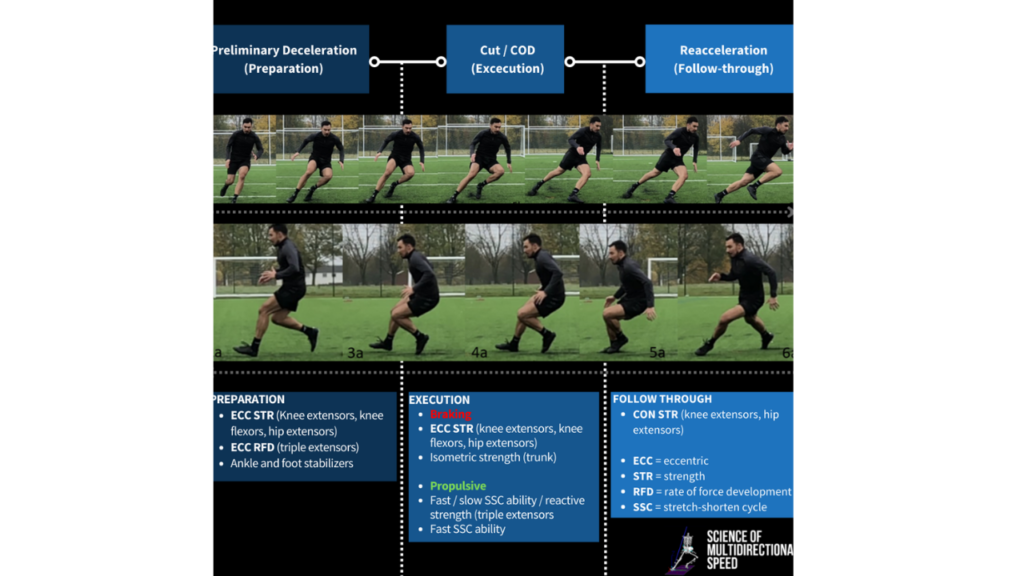
The Role of Eccentric Strength
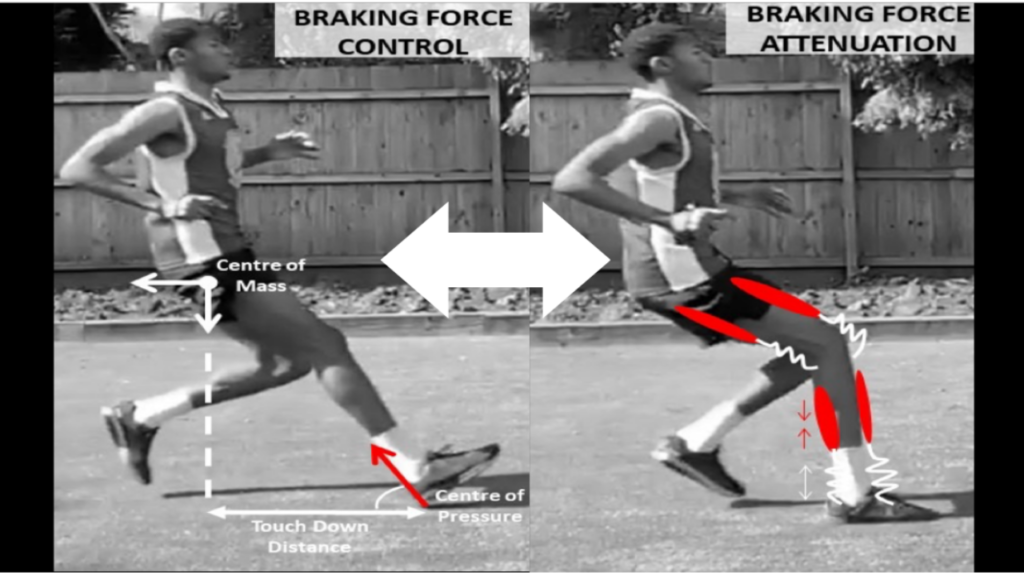
One of the key physical qualities behind effective deceleration is eccentric strength. During
an eccentric contraction, a muscle produces force while lengthening. This allows the body to
act like a brake.
For example, when an athlete sprints and suddenly needs to stop, the quadriceps,
hamstrings, glutes, and calf muscles must produce substantial force to slow the body down.
The trunk and hips also play an important role in controlling body position.
This is why simply becoming stronger in traditional lifts does not automatically make an
athlete good at decelerating. Strength needs to be transferred into movements that
challenge the athlete to absorb force quickly and under control.
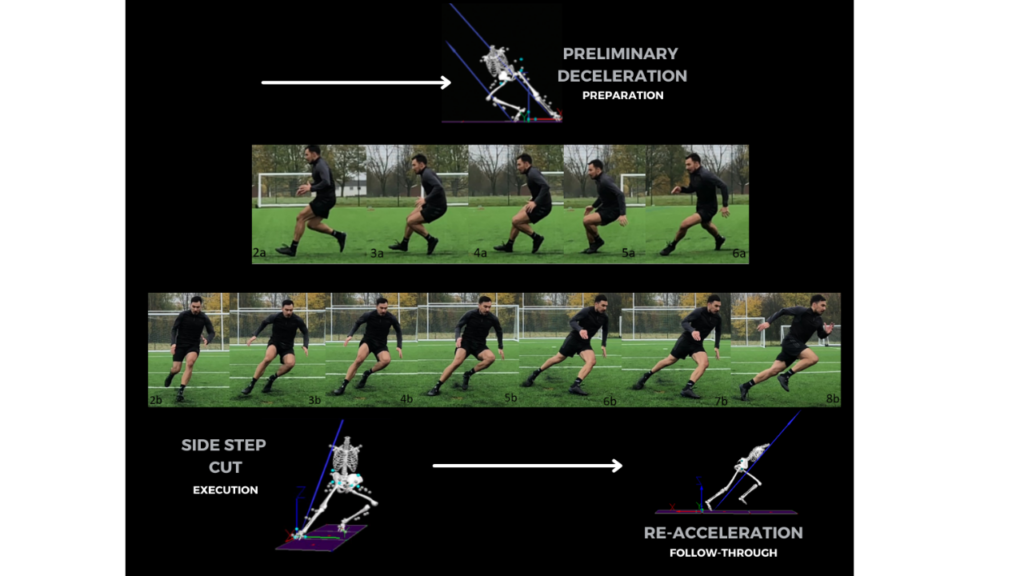
How Do We Train Deceleration?
Deceleration training should progress gradually. Athletes can begin with simple movements
such as controlled stops from a jog, snap-downs, landing drills, and low-speed changes of
direction. As control improves, training can progress to higher-speed approaches, single-leg
braking, lateral deceleration, and reactive change-of-direction drills.
For example, an athlete might sprint for 10–15 metres before being asked to stop within a
controlled distance. Later, the same drill could involve reacting to a coach’s signal and
changing direction. The objective is not simply to stop as quickly as possible, but to produce
and control force efficiently.
Strength exercises such as split squats, Romanian deadlifts, lunges, and other eccentric
focused movements can complement these drills by developing the physical capacity
required to absorb force.
Deceleration and Injury Prevention
Deceleration is particularly relevant when discussing lower-limb injuries because rapid
braking places considerable mechanical demands on the knee, hip, and ankle.
Poor control during deceleration may be associated with excessive movement at the knee or
hip, poor trunk control, or an inability to adequately absorb force. Training athletes to control
their centre of mass, maintain appropriate alignment, and distribute forces effectively can
therefore become an important component of an overall injury-risk reduction strategy.
However, there is no single “perfect” deceleration technique. Movement strategies differ
between athletes, sports, and situations. The goal is to develop sufficient physical capacity
and movement control to handle the demands placed on the athlete.
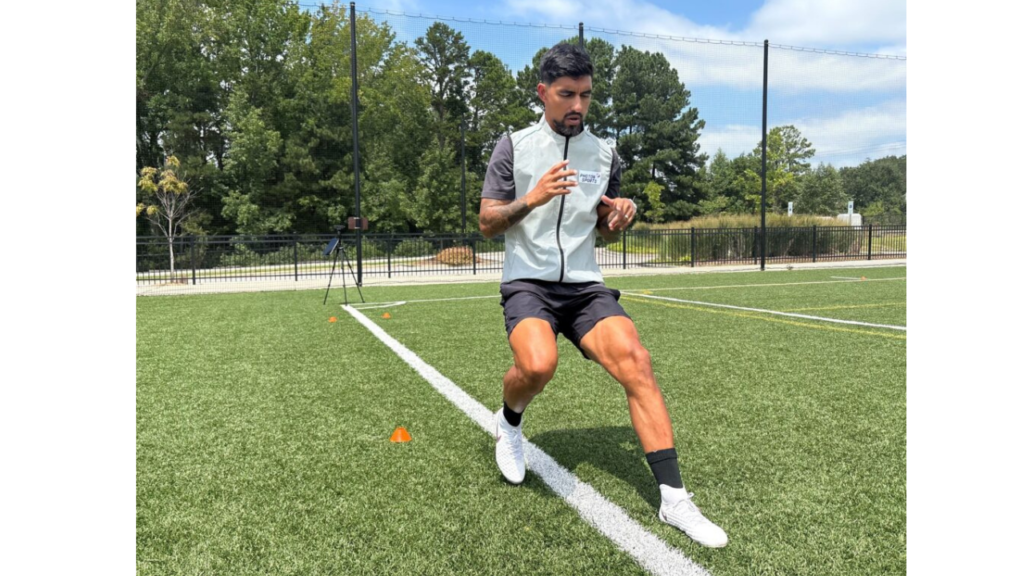
Who Needs Deceleration Training?
Almost every field and court sport can benefit from it. Footballers, basketball players, tennis
players, badminton players, hockey players, rugby athletes, and cricket players regularly
have to slow down, stop, and redirect their momentum.
It is equally valuable for sprinters and jumpers, where the ability to control high velocities is
an important part of training and competition.
Even recreational athletes can benefit. Anyone who participates in running, recreational
sports, or activities involving quick changes in direction needs the ability to safely manage
their momentum.
The Bottom Line
Being fast is only one part of athletic performance. The ability to control that speed is just as
important.
A complete strength and conditioning program should develop an athlete’s ability to
accelerate, maintain speed, decelerate, and reaccelerate. By progressively developing
eccentric strength, coordination, balance, and force-absorption ability, athletes can become
not only faster, but more capable of controlling their movement when the game becomes
unpredictable.
Because the fastest athlete isn’t always the one who wins.
Sometimes, it’s the athlete who can stop, control, and change direction better than everyone
else.

Chris Walker
August 16, 2026 12:04 amBài viết rất hữu ích, cảm ơn đã chia sẻ! Letco là công ty tư vấn du học Hàn Quốc uy tín, hỗ trợ trọn gói từ hồ sơ, visa đến học bổng. Tham khảo thêm tại letco.vn nhé.