Integrating GPS, IMU and Biomechanical Data for Comprehensive Movement Profiling
Author :- Mr. Kyle Justin
In today’s performance-driven world, understanding how the human body moves is more important than ever. Whether in sports performance, rehabilitation, injury prevention, or occupational health, professionals increasingly rely on objective data to make informed decisions. Traditional observation-based assessments provide valuable insights but often fail to capture the complete picture of an individual’s movement patterns.
The integration of Global Positioning System (GPS), Inertial Measurement Units (IMUs), and biomechanical analysis is transforming movement profiling. Together, these technologies provide a comprehensive understanding of movement quality, efficiency, workload, and injury risk.
Understanding GPS Technology
GPS technology is widely used to monitor movement across large areas by tracking an individual’s position in real time through satellite signals.
What GPS Measures
- Distance covered
- Running speed
- Sprint frequency
- Acceleration and deceleration
- Positional tracking
- Training workload
GPS is particularly valuable in outdoor sports such as football, cricket, hockey, rugby, and athletics, where monitoring physical demands is essential.
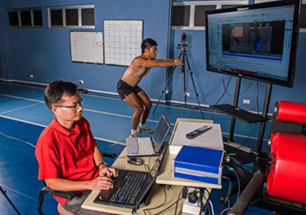
Limitations of GPS
While GPS accurately measures external workload and movement patterns, it does not explain how movement is performed. Two athletes may cover the same distance at the same speed while using completely different movement strategies. This is where IMUs and biomechanical analysis become essential.
Understanding IMU Technology
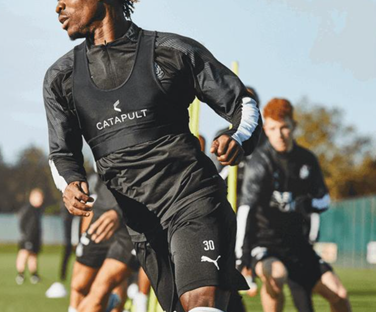
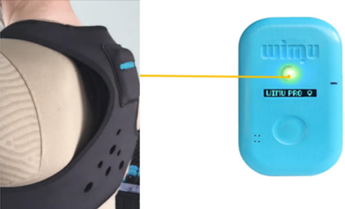
An Inertial Measurement Unit (IMU) is a wearable sensor that combines accelerometers, gyroscopes, and magnetometers to track body motion.
What IMUs Measure
- Joint movement
- Body segment orientation
- Angular velocity
- Acceleration patterns
- Balance and stability
- Movement symmetry
Unlike GPS, IMUs function effectively both indoors and outdoors, making them useful in rehabilitation clinics, training facilities, and research settings.
Why IMUs Matter
IMUs help identify subtle movement deviations that may not be visible through observation alone. For example, an athlete returning from injury may appear to move normally, while IMU data reveals reduced knee flexion, altered trunk posture, or asymmetrical loading patterns that increase reinjury risk.
Understanding Biomechanical Analysis
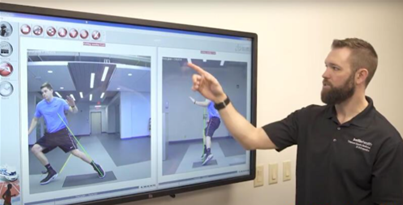
Biomechanics is the scientific study of movement and the forces acting on the body. It helps determine how efficiently an individual moves and whether excessive stress is being placed on specific joints or tissues.
Common Biomechanical Measures
- Joint angles and range of motion
- Ground reaction forces
- Muscle activation patterns
- Force production
- Movement efficiency
- Landing mechanics
- Gait analysis
Biomechanical data provides insight into movement quality rather than simply measuring movement quantity.
The Power of Integration
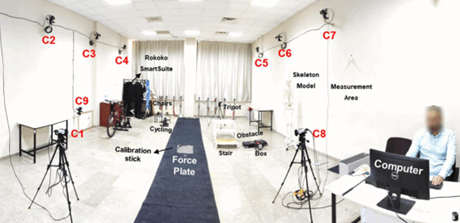
The true value of movement profiling emerges when GPS, IMU, and biomechanical data are combined.
- GPS answers: What did the athlete do?
- IMU answers: How did the athlete move?
- Biomechanics answers: Why is the athlete moving that way? Together, these technologies provide a complete understanding of movement performance.
Example of Integrated Analysis
Consider a football player during training:
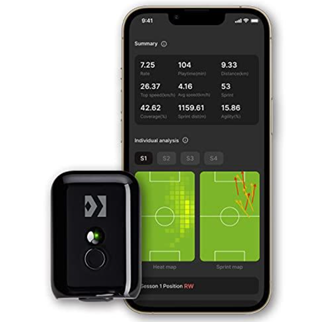
GPS Data Reveals
- Total distance covered: 9 km
- Maximum sprint speed: 31 km/h
- Number of high-speed efforts: 22
IMU Data Reveals - Increased trunk rotation during sprinting
- Reduced acceleration efficiency
- Lower-limb asymmetry
Biomechanical Analysis Reveals - Limited hip mobility
- Reduced force production in one leg
- Altered landing mechanics
Viewed separately, these findings provide only partial information. Together, they reveal the underlying factors affecting performance and injury risk.
Applications in Sports Performance and Injury Prevention
Integrated movement profiling helps practitioners identify:
- Inefficient movement patterns
- Technical limitations
- Sprinting deficiencies
- Fatigue-related changes
- Movement asymmetries
- Poor landing strategies
- Excessive joint loading
- Compensatory movement patterns
This information enables personalized training interventions, effective workload monitoring, and early identification of injury risks before they become significant problems.
Conclusion
GPS, IMU, and biomechanical analysis each provide a unique perspective on human movement. GPS measures external workload, IMUs capture detailed movement characteristics, and biomechanics explains the underlying mechanics of movement.
By integrating these technologies, practitioners can move beyond simple observation and develop a comprehensive understanding of performance, injury risk, and rehabilitation progress. As sports science and rehabilitation continue to evolve, understanding not only what movement occurs, but also how and why it occurs, will remain essential for optimizing human performance and long-term health.

RichardCam
July 24, 2026 9:16 pmСхема помощи зависит от состояния, стажа употребления, противопоказаний и дальнейших целей лечения. Подробнее тут - нарколог вывод из запоя геленджик
RicardoUnjut
August 6, 2026 5:30 amКлиника «Метод Довженко» принимает пациентов в Москве по адресу: Столярный переулок, 3к18. Узнать цены, заказать консультацию, оставить заявку, уточнить порядок поступления в стационар или задать вопросы дежурным консультантам можно по номерам 8 (800) 301-53-09 и +7 (499) 403-16-12. Звонок не обязывает сразу ехать в центр: специалист спокойно объяснит, что делать в конкретном случае, какие данные подготовить, нужен ли выезд нарколога к дому или лучше сразу выбрать стационарное лечение. Получить дополнительную информацию - москва вывод из запоя на дому