

Author :- Dr. Samiksha Shetty
GROWING PAINS
What’s Normal, What’s Not — and When to Stop Waiting
Your child complains of leg pain. Someone says it’s “just growing pains.”
So you wait.
But the pain keeps returning.
Here’s what parents should actually know.
Growing Pains Are Real — But They’re Specific
True growing pains typically:
- Affect both legs
- Feel muscular rather than joint-related
- Occur in the evening or at night
- Are completely gone by morning
- Cause no limp, swelling, or tenderness
If the pain doesn’t fit this pattern, it shouldn’t automatically be labelled as growing pains.
It deserves assessmen
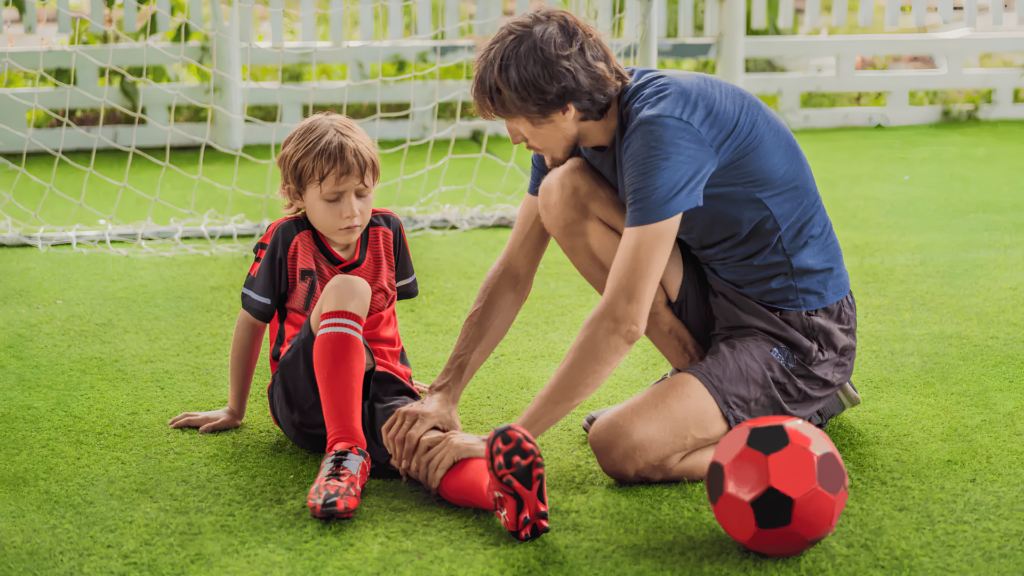
Common Conditions Mistaken for Growing Pains
Osgood-Schlatter Disease
Pain and swelling just below the kneecap where the patellar tendon attaches to the shin bone.
Common in: Active children aged 10–15 involved in running and jumping sports.
Typical signs:
- Tender lump below the kneecap
- Pain during sport
- Pain when pressing the area
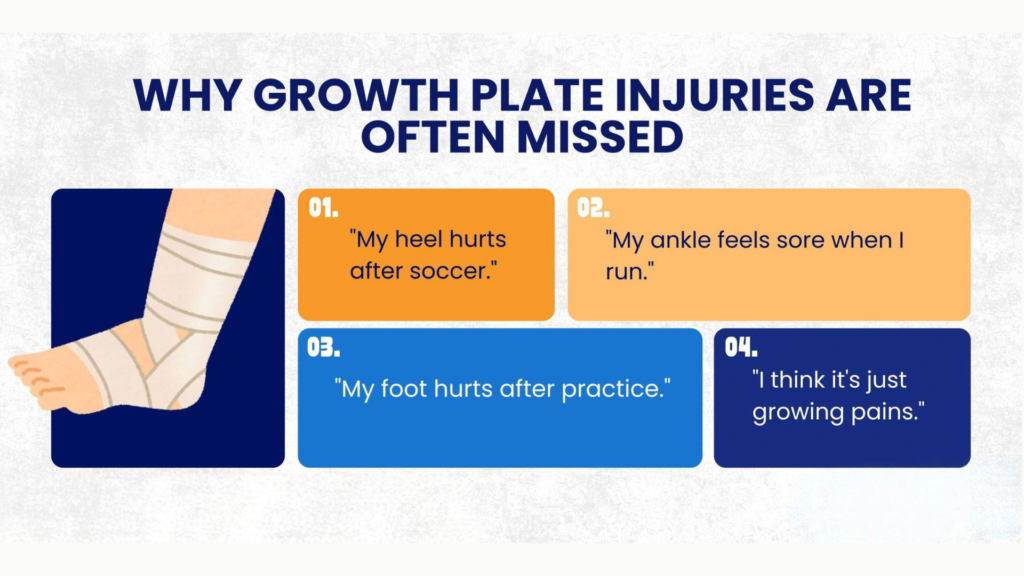
Sever’s Disease
A growth plate irritation at the heel.
Common in: Children aged 8–13 involved in football, athletics, dance, and other running sports.
Typical signs:
- Heel pain during activity
- Symptoms improve with rest
- Squeezing the heel reproduces pain
Patellofemoral Pain
Pain around or behind the kneecap.
Often aggravated by:
- Stairs Squatting
- Running
- Prolonged sitting
Particularly common in adolescent girls and often influenced by strength deficits, training load, and movement patterns.
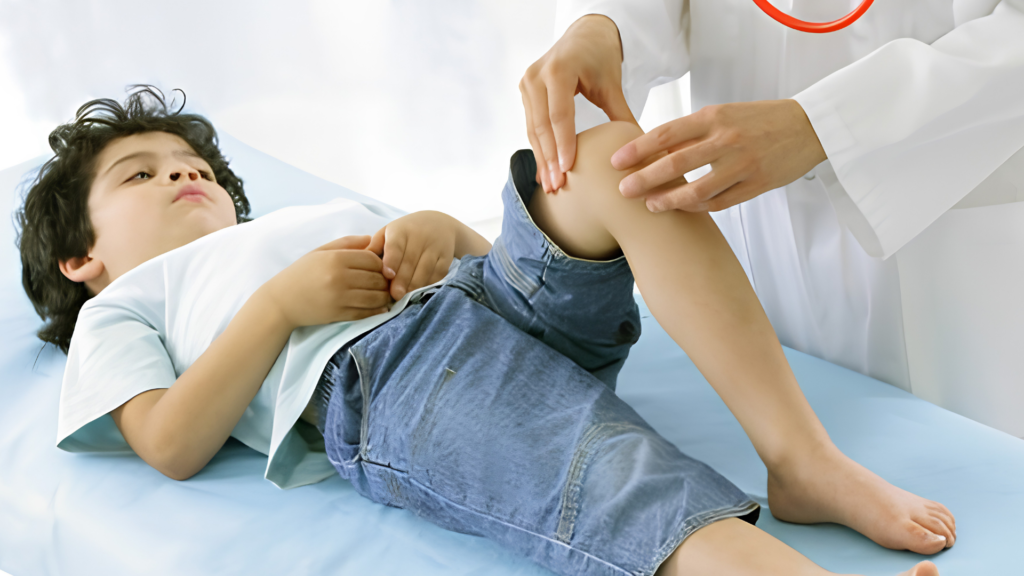
Stress Fractures
- One of the most overlooked causes of persistent pain in young athletes.
Unlike a sudden fracture, stress fractures develop gradually from repetitive loading.
Common locations: - Tibia (shin bone)
- Metatarsals (foot bones)
- Pars interarticularis (lower back)
Warning signs:
- Localised pain
- Progressive worsening with activity
- Pain during hopping
- Symptoms that may eventually occur at rest
Early X-rays can appear normal.
MRI is often the most sensitive investigation.
Fractures Mistaken for Sprains
Children’s bones do not fracture like adult bones.
Some fractures can present with:
- Minimal swelling
- No obvious deformity
- A seemingly minor injury mechanism
If there is localised bony tenderness after a fall, a fracture should be ruled out before assuming it is a sprain.
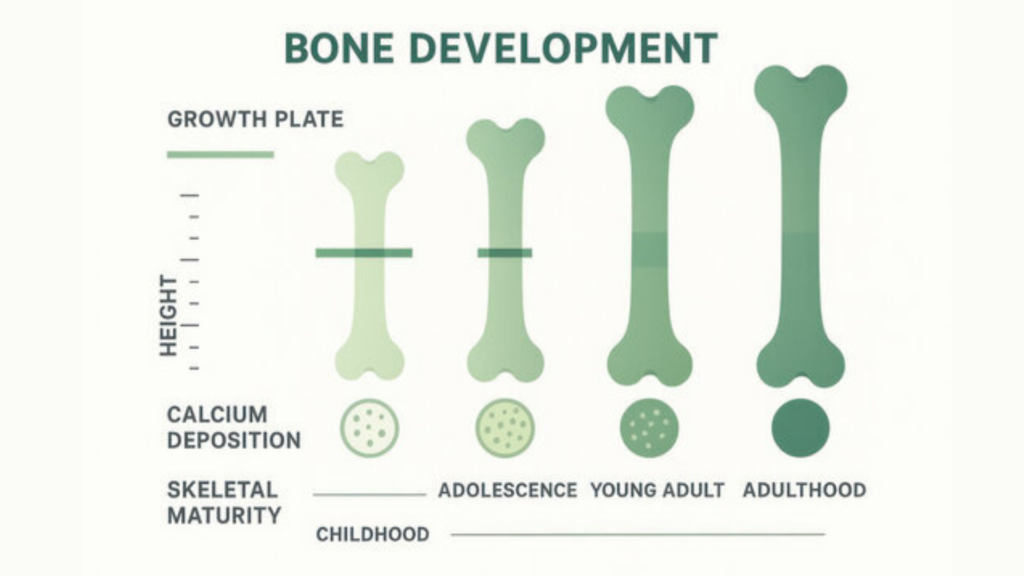
Why Growth Plates Matter
Growth plates are often the weakest part of a child’s skeleton.
In adolescents, growth plates frequently fail before ligaments tear.
That single fact changes how paediatric injuries should be assessed and managed
Red Flags That Need Medical Review
Seek medical assessment if your child has:
Night pain that persists into the morning
- A bony lump or unexplained swelling
- Refusal to walk or bear weight
- A limp lasting more than a week
- Localised bone tenderness after a fall
- Fever, fatigue, or unexplained weight loss alongside pain
Most childhood pain is benign.
These signs are not
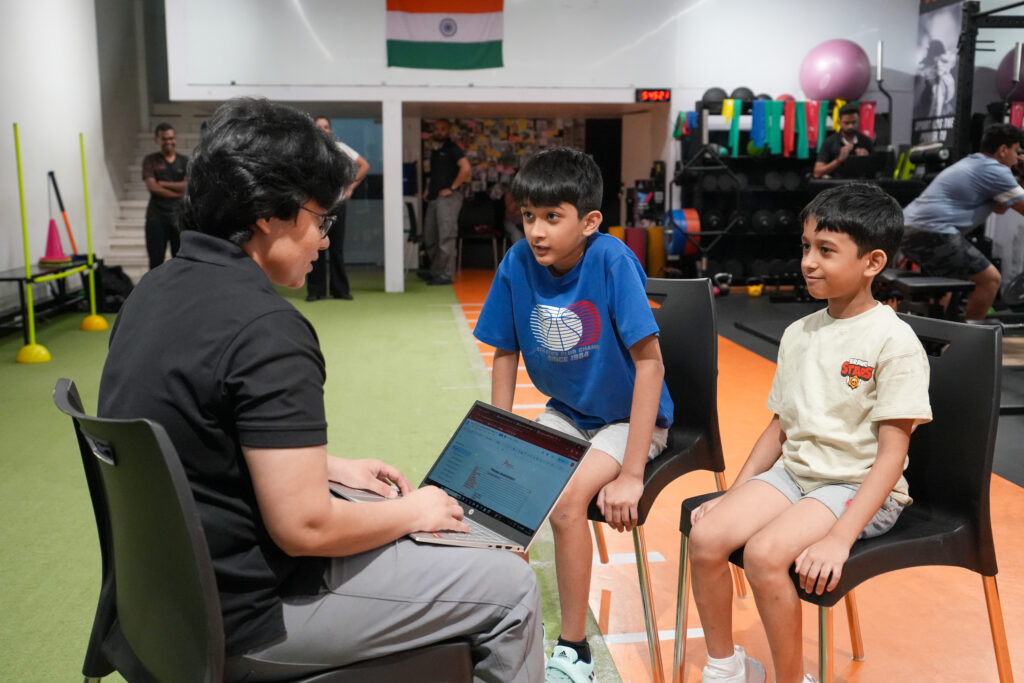
What a Good Assessment Looks At A quality assessment goes beyond the painful area and considers three key factors.
- 1. History
Understanding: - When symptoms occur
- Whether pain is one-sided or both-sided
- The relationship between pain and activity
- Whether symptoms are getting worse
Often, the pattern tells us more than imaging.
2. Nutrition
This is commonly overlooked.
Poor energy intake, inadequate calcium and vitamin D, and excessive training loads can significantly increase the risk of bone stress injuries.
For adolescent athletes, screening for Relative Energy Deficiency in Sport (RED-S) is often important.
3. Movement
How a child moves can reveal why tissues are being overloaded.
Observing: - Walking
- Squatting
- Single-leg balance
- Hopping
often provides valuable information before any scan is considered.
A Quick Guide for Parents Likely Growing Pains
✓ Both legs
✓ Evening or nighttime symptoms
✓ Gone by morning
✓ No limp
Management:
Reassurance, massage, stretching, and monitoring.
Pain During Sport at a Specific Spot
Get it assessed early.
Many growth plate conditions respond well when managed promptly.
Pain After a Fall with Bone Tenderness
Consider imaging before assuming it is a sprain.
Children’s fractures can be subtle.
Any Red Flags Present
Medical review should come first.
The Takeaway Pain in a growing child is information.
Sometimes it’s growing pains.
Sometimes it’s a growth plate injury, a stress fracture, or something that requires further investigation.
The key is not to assume.
Assess before you reassure.
Image before you call it a sprain.
And don’t let “growing pains” become the answer to every question.
Need a suitable title for this blog

Cleo3595
June 27, 2026 1:02 pmhttps://shorturl.fm/fVjlV