
Author :-Omkar Shirke
What is Forward Head Posture?
Have you ever noticed a hump at the base of your neck? Or your head is always protruding forwards when you work on your laptop or desktop for prolonged periods?
That’s probably because of forward head posture, which may be acquired due to faulty or prolonged bad postures.
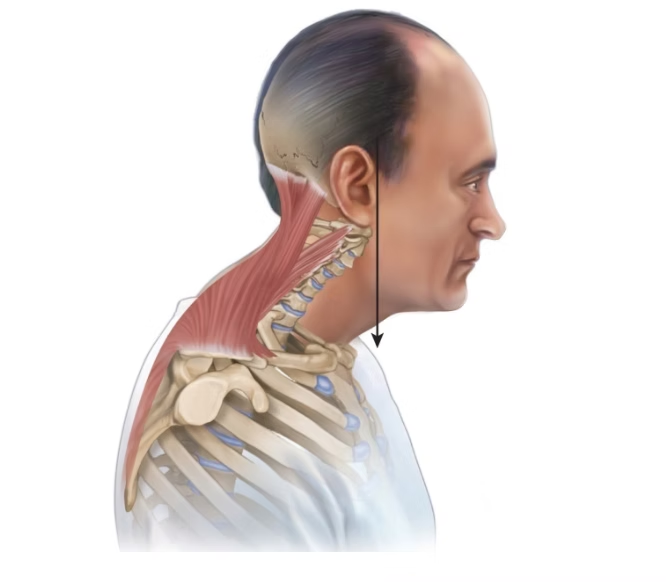
Forward head posture occurs when the head shifts forward from your body‘s center of gravity, to compensate the upper shoulders and thoracic spine.
There is hyperextension of the upper neck (cervical) vertebrae along with forward translation of the cervical vertebrae which result in increase in keeping
the head more in the forward direction.
Thoracic Kyphosis, rounded shoulders and upper back are the further complications of this syndrome {1} .
There may be painful shortening of the muscles of the back, the neck, as well as compression of the cervical vertebrae.
What are the causes of this posture?
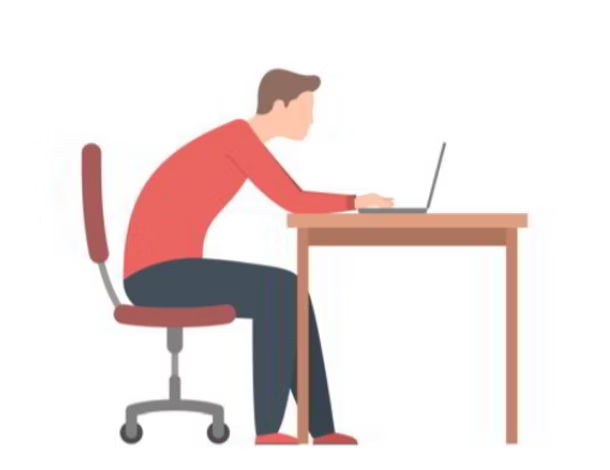
This type of posture is acquired due to faulty prolonged postures of the neck more common in the people who have desk job, jobs which demands prolonged working in front of desktop or laptop {2} .
As a result of prolonged faulty position of the neck the effect of gravity also plays a major role in slouching, poor ergonomic alignment.
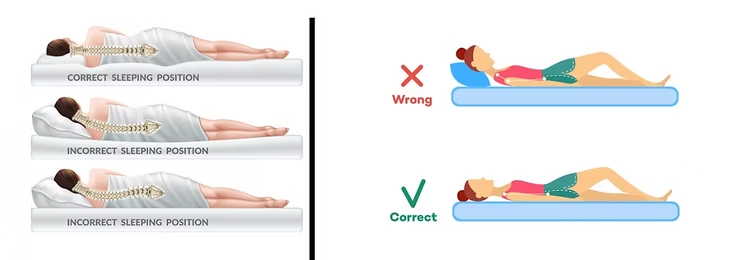
Improper sleeping postures with head elevated too high, or falling of the neck to one side when sleeping in side lying position puts a tremendous load on the neck and upper back region {3} .
This type of posture is more common in people who have compensated muscle strength in upper back and lower back muscles.

Another cause of this type of posture is excessive use of the cellphone for
texting or for app usage.
What are the symptoms?
As there is an increase in comprehensive loading on tissues in the cervical spine, particularly the facet joints and ligaments. Studies have reported that symptoms including neck pain, headache, temporomandibular pain, and musculoskeletal disorders are related to this posture.
FHP greatly influences respiratory function by weakening the respiratory muscles. Forward head along with round-shoulders can result in shoulder pain and dysfunction due to altered scapular kinematics and muscle activity which may further increase the stress on the shoulder {4} . Group of posterior cervical muscle goes into weakness. The corresponding flexor or muscles in the front shorten and lengthen respectively.
How to avoid Forward head posture?
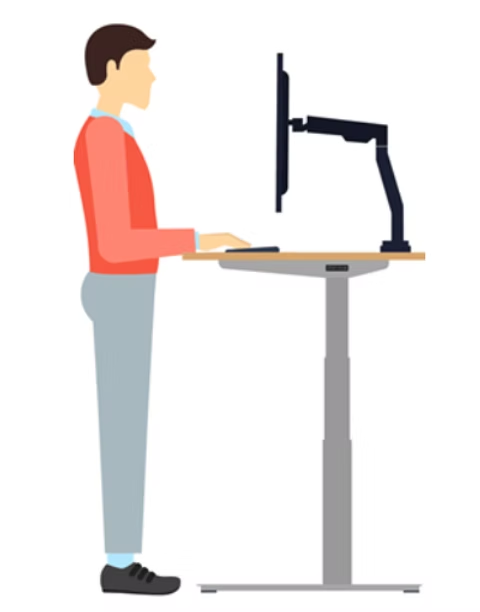
Minimize the screen time-avoid prolonged hours of sitting in front of desktop or laptop, break your postures often make use of the standing desk which will minimize the postural load.
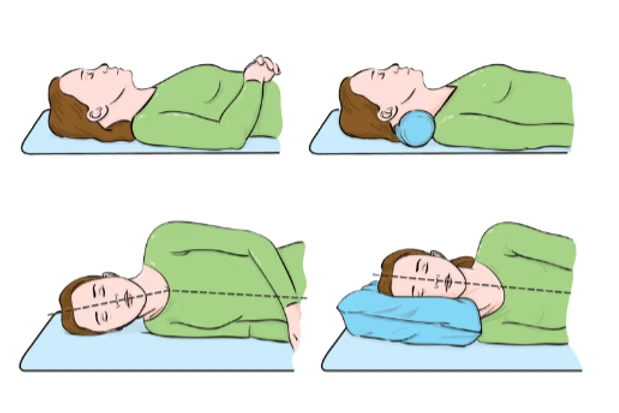
Make use of proper pillow, make sure that your head is properly supported and your neck doesn’t fall on one side when you sleep sideways use a towel roll to support your neck.
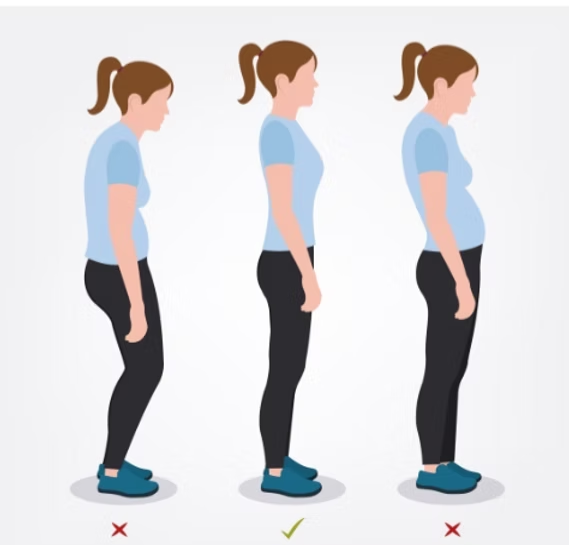
Stand in an erect posture- Practicing good posture will naturally pull your shoulders and neck back, instead of hunching toward the ground. This alleviates a lot of the pressure coming to the neck and the lower back region.
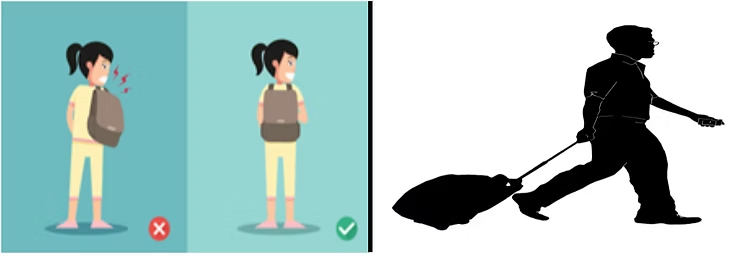
Carry a backpack instead of shoulder bag. Try to keep backpack light in weight otherwise make use of a trolley bag.
How to treat Forward Head Posture?
Ergonomics while using laptop or desktop. Workplace modification in sitting or standing desk is very important along with the importance of breaking prolonged postures which will decrease the load on the neck and entire spine region.
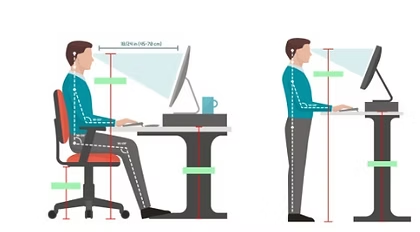
A 2017 study comparing targeted exercise to workstation modification for reducing office-related neck, shoulder, and back pain found exercise was the more effective approach. The subjects in the study who exercised began to feel better in just four months {5} .
Considering the compensations that happen in forward head postures exercises should be planned accordingly. Focus should be on improving the mobility at cervical and shoulder joints. Exercises including chin retractions.
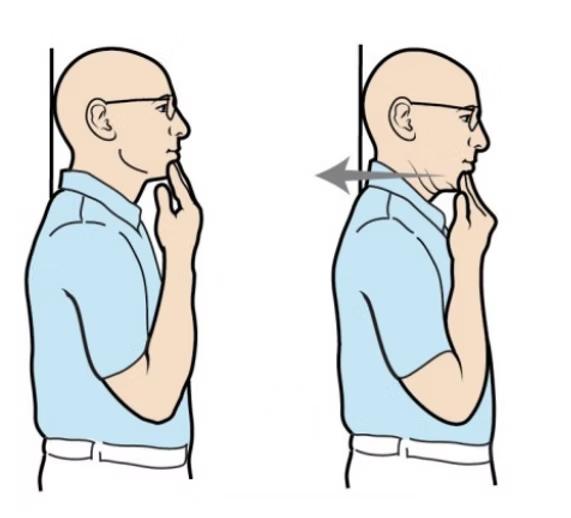
Stretching Exercises targeted on the tight muscle groups such as
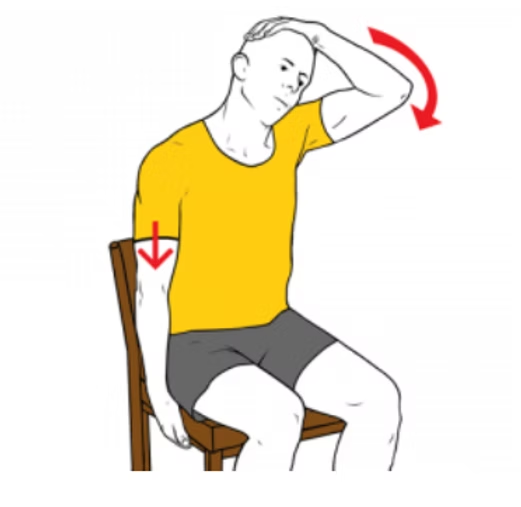
Upper trapezius
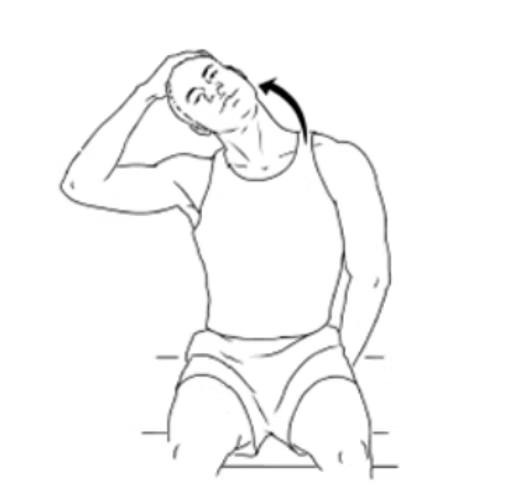
Scalenes
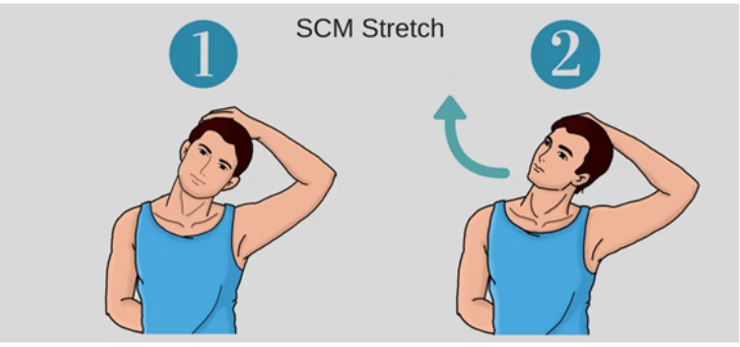
Sternocleidomastoid muscle.
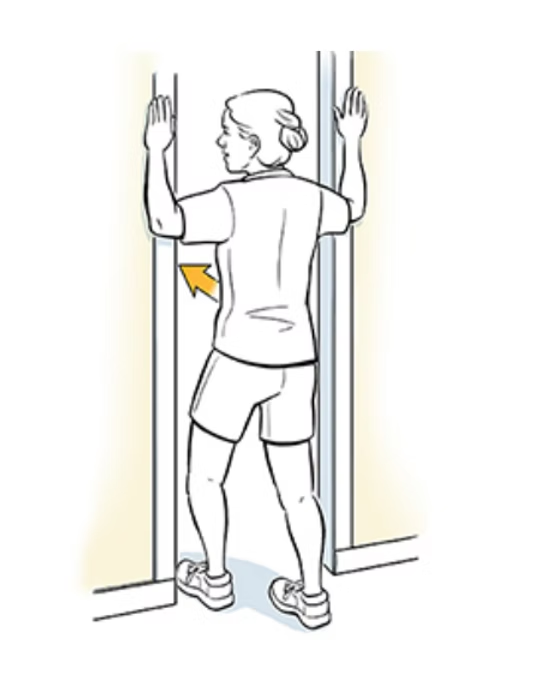
Pectoralis Major
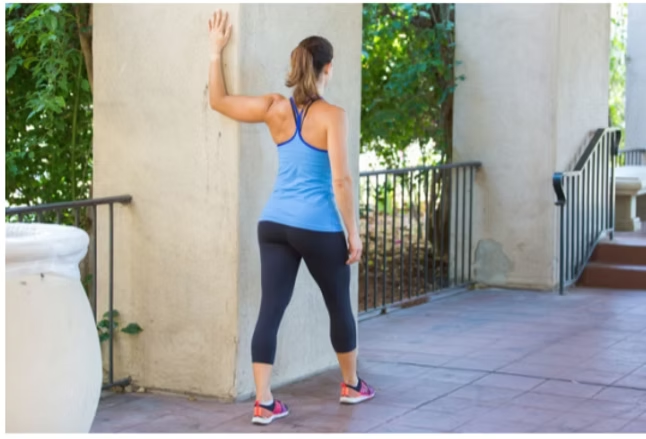
Pectoralis Minor
To reduce spasm and the tightness techniques like Deep Tissue Release, foam ball rolling and icing can be used.
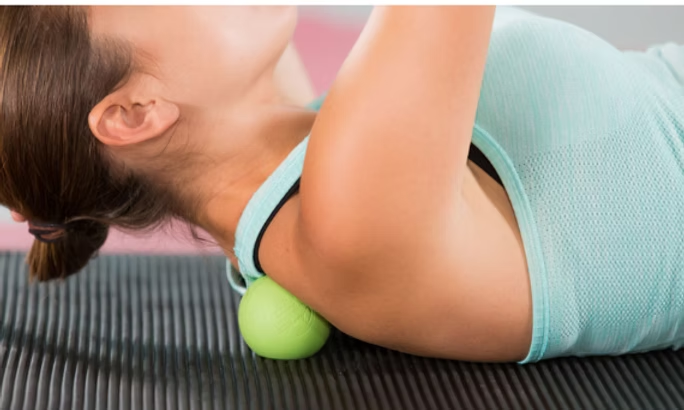
Strengthening and Endurance exercises including cervical isometric strengthening exercises (initial phase) progressing to isotonic and dynamic strengthening exercises.
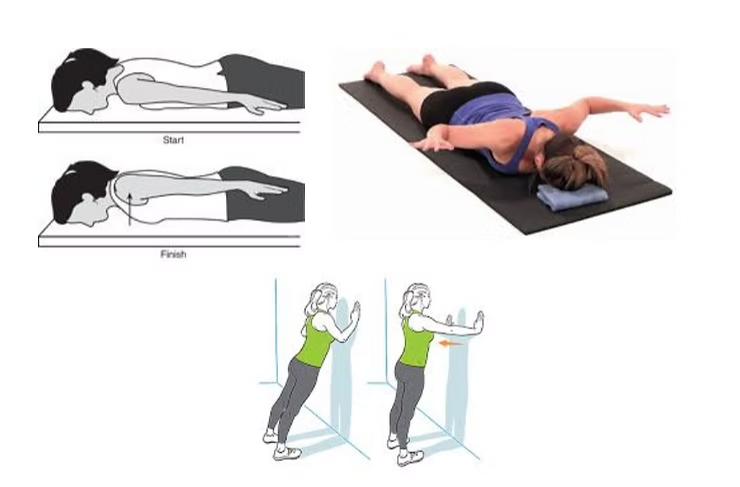
To correct the forward head posture a detailed evaluation by a physiotherapistmainly strength of neck muscles, shoulder blade muscles and tightness shouldbe done. Focusing on the concern areas like muscle strength insufficiency inprolonged postures, along with that emphasis on do’s and don’t’s, correction ofwork and home ergonomics should be in rehabilitation program.
References-
1] Koseki T, Kakizaki F, Hayashi S, Nishida N, Itoh M. Effect of forward head posture on thoracic shape and respiratory function. Journal of physical therapy science. 2019;31(1):63-8.
https://www.ncbi.nlm.nih.gov/pubmed?cmd=link&linkname=pubmed_pubmed_reviews&uid=30774207&log$=relatedreviews&logdbfrom=pmc.
2] Burt HA, Effects of faulty posture; President's Address. Proc R Soc Med.1950; 43(3):187–194.
3] Cary D, Briffa K, McKenna L. Identifying relationships between sleep posture and non-specific spinal symptoms in adults: A scoping review. BMJ Open. 2019;9(6):e027633. Published 2019 Jun 28. doi:10.1136/bmjopen-2018-027633.
4] Weon JH, Oh JS, Cynn HS, Kim YW, Kwon OY, Yi CH. Influence of forward head posture on scapular upward rotators during isometric shoulder flexion. Journal of Bodywork and movement therapies. 2010 Oct 1;14(4):367-74.
5] Shariat A, Cleland JA, Danaee M, Kargarfard M, Sangelaji B, Tamrin SBM.
Effects of stretching exercise training and ergonomic modifications on musculoskeletal discomforts of office workers: a randomized controlled trial.
Braz J Phys Ther. 2018;22(2):144-153.